Assess Centennial roofs with findings and photos. We connect observed defects, receiving-layer questions and useful material work before selecting repairs.
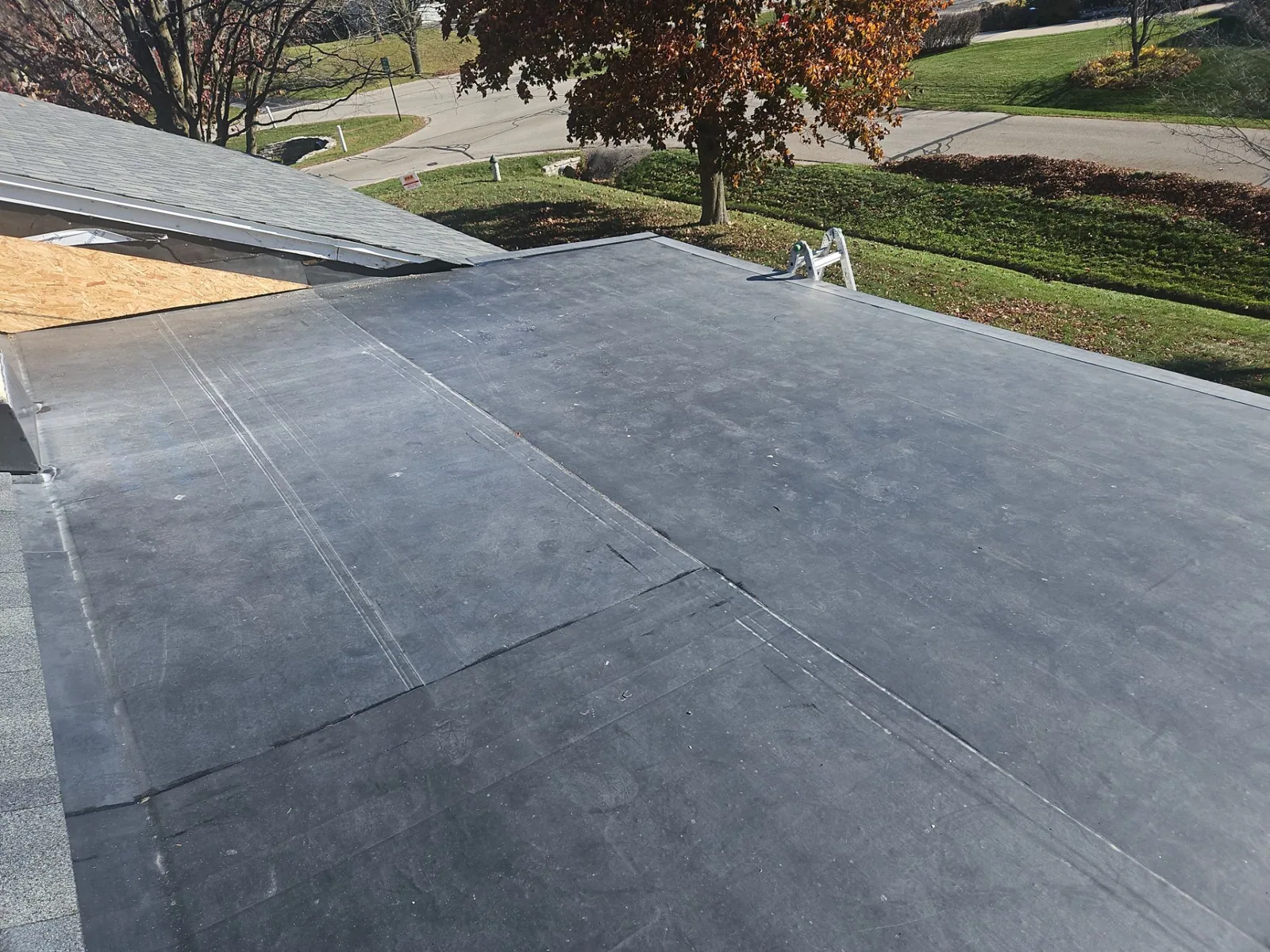
An owner comparing a seam correction with another roof expense needs to know where the defect lies and which material the proposed repair will reach. A broad description of deterioration leaves that construction choice unclear. Commercial Roofing Centennial prepares written condition findings for selected commercial roofs in Centennial, CO. We connect observed details and photographs with their material consequences, identifying useful correction and further assessment before a work boundary is fixed.
Office properties form part of Greenwood Village's business setting, including Greenwood Plaza and Village Center. Midtown Centennial also includes established office development within its long-term planning area. Roof condition at an individual property follows the installed assembly and observed findings. We examine those components directly, keeping each proposed correction connected to the receiving construction and actual interface that the owner needs to compare.
A photograph should connect the finding with a specific roof component and the surrounding construction. We identify the relevant seam, curb, outlet or perimeter detail during assessment. Its function matters to the useful correction. An open join and a blocked outlet can both appear near water indoors while requiring different material or maintenance tasks.
Roof examination for written findings assesses the condition around that component before a response is described. We distinguish visible damage from receiving-layer questions that need another opening. The written finding connects the observation with the construction it affects, allowing the owner to locate the proposed work and understand its purpose. A photograph of the surface does not independently establish the material beneath it; the assessment identifies where further access is needed before retention is chosen.
A building can contain several coverings because of additions or earlier renewal phases. We identify those boundaries and their relevant connections. The supporting deck, insulation and attachment can also differ below apparently continuous field areas. Those conditions influence preparation and the useful correction available at the observed defect.
Identifying retained and renewed roof assemblies keeps a completed patch or curb distinguishable from its surrounding field. A rubber roof area needs different joining components from a thermoplastic section. We identify the system before recommending procedure. The written scope should describe the material removed and the construction suitable to remain, allowing the owner to compare an actual roof assembly instead of one undifferentiated area label covering several preparation requirements.
Indoor observations can direct roof investigation without establishing the exterior entry on their own. We examine relevant seams, curbs, wall connections and drainage. Concealed travel can separate the reported room from the actual defect. The condition findings identify the weather connection requiring correction and the material questions needing further assessment beneath it.
Investigation of the roof water route can reveal insulation or support unsuitable to remain around the repair. We identify the useful opening before removal. Where access has not established concealed condition, that question stays distinct from the observed surface finding. An occupied office roof may need room release below the investigation area. We explain that access requirement alongside the material task, connecting protection and examination with the actual proposed opening.
A useful condition report connects findings with a correction that has an identifiable receiving boundary. Local work can restore a detail while retaining suitable covering around it. Broader deterioration can require removal beyond the visible defect. The comparison should explain what the proposed expense renews and what assembly condition remains outside the task.
Material-specific repair assessment identifies cleaning, removal and compatible components necessary for that result. At a curb, unsuitable support or insufficient height can enlarge the preparation beyond the flashing itself. At an outlet, the receiving elevation may need adjustment before the field can drain to it. We describe those physical tasks together. The owner can compare complete correction scopes, with related equipment or building responsibilities identified where they make suitable roof preparation possible.
A detail photograph can show the opening without explaining the clearance available for its reconstruction. We assess the receiving height and nearby layers before selecting work. Added insulation may reduce the vertical space at a curb, while old buildup can raise the surface around an outlet. We identify those relationships alongside the observed defect before defining useful correction.
At a perimeter, a new metal component requires suitable support and continuity with the roof flashing. Damaged receiving material can require reconstruction beneath the visible piece. At a moving connection, the proposed repair should preserve appropriate geometry and compatible components. We describe the physical preparation needed at those interfaces. The owner receives a construction comparison that reaches the receiving condition, with photographs linked to the actual detail work required to complete the correction.
The original office-park setting of Inverness Business Park has expanded to include residential uses. At a selected commercial property in the wider area, a condition finding should identify the actual roof task and the occupied space associated with its opening. We establish the material boundary before the owner coordinates room protection or equipment availability. The written finding connects that operating request with a particular preparation or examination task, giving the property team a concrete basis for arranging the release.
For properties in Midtown Centennial, acquisition-related roof assessment can use the same distinction between observed condition and further receiving questions. The proposed work needs suitable closure and installation conditions. A changed concealed finding should lead to another material comparison before removal expands. The written construction boundary remains connected to the access, protection and receiving work necessary to complete the actual correction at the selected building.
When a repair or renewal phase is completed, its field and detail work needs examination before release. We identify the finished boundary and any related task still planned. Material information should correspond to the assembly installed. The earlier condition finding can then be connected with the correction supplied, keeping retained construction outside that boundary clear for later review.
Service activity should protect the new connection and leave outlets or equipment interfaces reachable. Compatible procedures remain necessary when another component changes. We explain those considerations at completion. A later assessment can compare current observations with the installed assembly and adjoining material. The owner selects its next useful correction through actual condition, with photographs and written findings helping identify the physical task and the occupied release it requires.
Its component, location and material consequence should be identifiable alongside the image. Different defects can need different responses. We connect the observed detail with the physical correction before a work scope is selected.
Layers beneath the covering may need another opening or appropriate examination. That question remains distinct from visible damage. We identify further access before choosing retention within the proposed repair boundary.
Their receiving layers and joining procedures can differ because of additions or earlier work. The useful scope must suit the actual assembly. We identify those boundaries before recommending compatible preparation and correction.
The material left around and beneath the correction should be clear. Its suitability affects the completed connection. We describe that boundary alongside removal and related detail tasks so the owner can compare the actual construction supplied.
An opening or examination needs an identifiable room and operating arrangement where relevant. Protection and service release should follow that task. We explain the construction requirements before the owner coordinates the affected space.
Commercial roofing in Centennial
Commercial roofing in Centennial
Commercial roofing in Centennial
Commercial roofing in Centennial
Commercial roofing in Centennial
Commercial roofing in Centennial
Commercial roofing in Centennial
Commercial roofing in Centennial