Evaluate commercial roof recover options in Centennial. We check retained layers, moisture, attachment and detail heights before pricing an overlay.
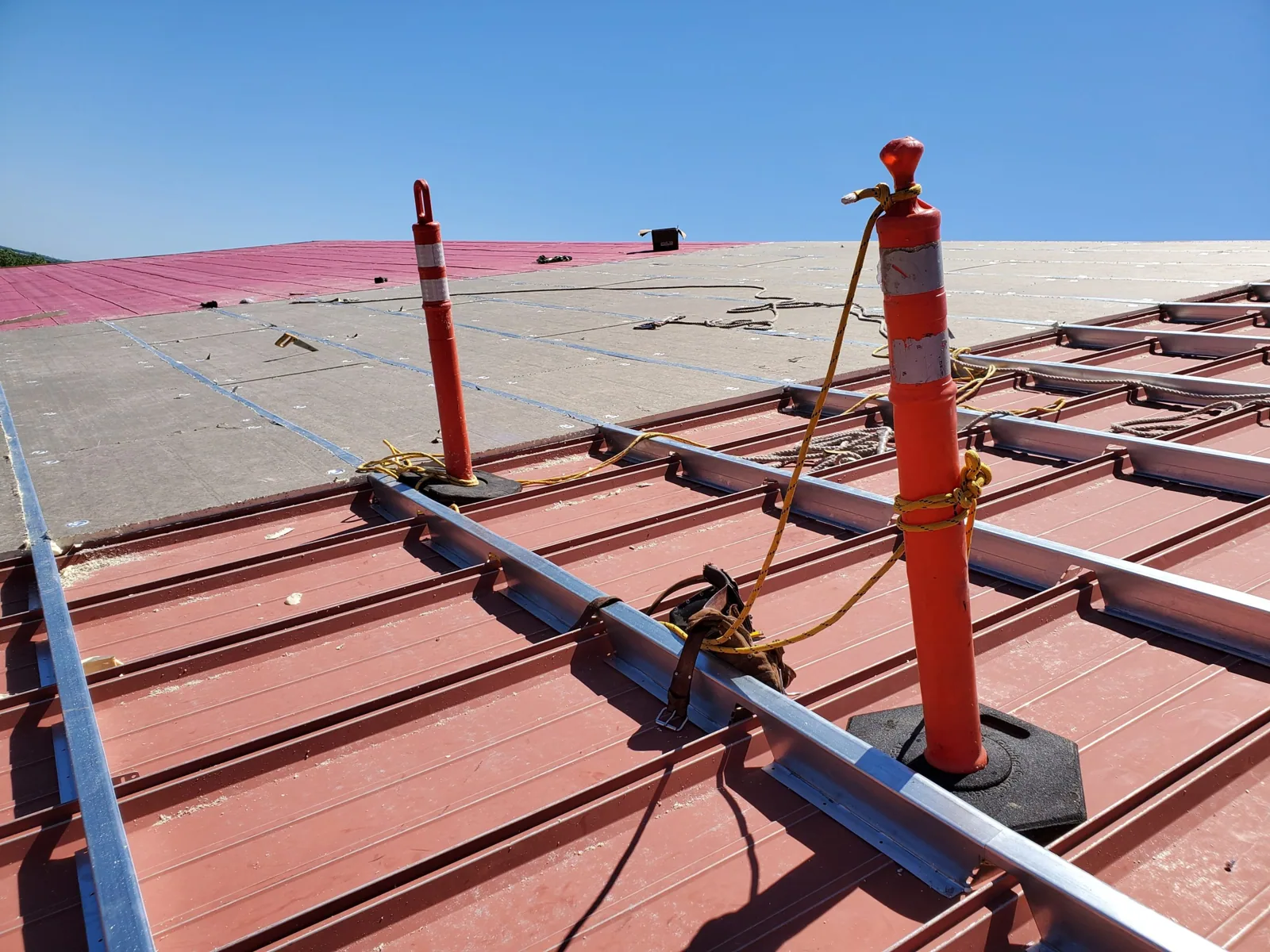
Retaining an existing assembly can reduce removal work, but only when that assembly provides a suitable base for another roof. A recover decision in Centennial, CO, begins beneath the visible surface, where moisture and attachment affect the proposed construction. Commercial Roofing Centennial examines those conditions before presenting an overlay as an alternative to tear-off. The retained material must earn its place in the new assembly through inspection and appropriate testing.
Inverness Business Park combines established commercial development with housing added during its later growth. An occupied property in that setting may benefit from reduced demolition, provided existing layers can remain safely. We compare that possibility with the cost of correcting hidden deterioration and low flashing heights. The owner needs a complete recover scope, including removals within the retained roof, rather than a proposal limited to placing another membrane.
Roof layers accumulate through repairs, previous overlays and changes in materials, sometimes without an obvious indication at the surface. We identify the number and composition of existing coverings through records and selected openings. The applicable code, assembly condition and proposed system limit what can remain. Centennial lists the 2021 IBC and 2021 International Existing Building Code among its adopted codes, so recover eligibility requires review against the applicable requirements.
Structural capacity deserves attention because a recover adds material while retaining the old assembly's weight. The assessment considers new insulation, board, membrane and other planned components, together with the existing construction. Unresolved loading questions may require design input before the owner approves installation. We also examine the substrate that will receive attachment or adhesive. A recover suitable for one deck and roof configuration may need a different attachment approach elsewhere, even where both surfaces look similar.
Moisture held inside insulation can weaken support, alter thermal performance and accelerate deterioration in susceptible deck materials. Covering those conditions adds expense without removing the cause. We use examination and appropriate testing to establish which areas need opening, then compare findings across the proposed recover area. An infrared moisture survey can help direct investigation when the assembly and conditions support its use. Selected physical checks provide the confirmation needed for removal decisions.
Localized wet areas may require removal and replacement even when surrounding material can remain. Those repairs must leave a stable, level transition beneath the new covering. Extensive or poorly bounded moisture can make complete roof replacement more appropriate. We explain that change through the extent of defective material and the work required to correct it. Keeping large uncertain areas concealed simply to preserve the original recover proposal can undermine the purpose of the project.
An overlay raises the finished roof surface and reduces the exposed height available at existing curbs and wall flashing. That height change matters at drains, rooftop doors, equipment supports and perimeter transitions. We measure these relationships before choosing new board or insulation layers. A low curb may require modification, while a suitable existing curb may accept a properly designed flashing connection. Each condition changes the work that accompanies the recover.
A failed flashing connection should receive correction rather than disappear beneath new surface material. We assess how the new assembly will terminate and whether adjoining wall materials provide a sound connection. Equipment lines and supports may restrict working room around a penetration. In that case, trade coordination needs to happen before the covering reaches the detail. The owner should know which transitions can remain, which require rebuilding and which need another trade to release access.
Attachment for the new roof must account for the existing layers between the membrane and the structural deck. Mechanical fastening requires a suitable path to a deck capable of holding the specified fasteners. Adhered construction needs a compatible, stable receiving surface and installation conditions suitable for the adhesive. Existing blisters, loose layers or uneven patches may require correction before either approach can proceed.
Different coverings also need separation where material contact would create an incompatibility. For an EPDM assembly, we evaluate membrane support, adhesive suitability and the treatment of seams and flashing. Other single-ply systems use different joining methods and material restrictions. These installation differences belong in the comparison rather than being treated as interchangeable surface choices. We check the proposed assembly as a whole, including perimeter securement, cover board and areas exposed to rooftop service traffic.
Midtown Centennial's established office parks provide a useful local setting for comparing demolition with retained construction. Keeping a dry, suitable assembly in place can change debris handling and the extent of temporarily exposed deck. It does not remove the need to protect interior operations where wet sections or defective details must come off. We identify those openings separately so occupied rooms can be released in a deliberate sequence.
For commercial buildings in Midtown Centennial, the practical comparison includes lifting locations, tenant access and equipment servicing throughout installation. Centennial's required mid-roof inspection also needs an available review stage within the recover sequence. Work that depends on inspection must remain accessible until the applicable check is completed. We plan around those physical requirements without assuming that less demolition automatically means a shorter overall schedule. Detail reconstruction and attachment preparation can still control the working period.
A recover estimate should separate the new covering from repairs needed to make retained construction suitable. Wet-area removal, curb changes, drainage transitions and attachment preparation can materially affect that comparison. The owner can then evaluate recover and replacement on equivalent detail coverage rather than on different assumptions about hidden work. We explain the retained roof's limitations alongside the proposed new construction.
Future equipment access and service paths deserve consideration before the assembly is closed. Appropriate protection and preventive roof maintenance help preserve seams and flashing exposed to regular rooftop activity. We also identify drainage items that need attention after the recover. A suitable overlay should leave an assembly that can be inspected and repaired, with its retained and replaced components clearly distinguished for future decisions.
Limited, well-defined wet areas may permit selective removal when the surrounding assembly remains dry, sound and eligible for retention. We replace those sections with compatible materials and provide stable transitions. Widespread or uncertain moisture requires a broader reassessment before another covering is installed.
The existing drainage geometry needs correction where an added layer would preserve or worsen a low spot. We review outlet elevations and available room for slope changes. A new membrane can renew the weather surface, but water still needs a suitable route to the drain.
Current physical condition governs the retention assessment, together with code and the proposed assembly requirements. Warranty records can help identify materials and prior construction. They cannot establish that insulation is dry or that attachment remains suitable without examination of the roof itself.
Added roof height can leave too little exposed curb for the new flashing detail. Raising or replacing that curb involves equipment access and sometimes mechanical work. We include those dependencies in the comparison so the selected covering can receive complete detailing at the finished elevation.
The new assembly must perform as its intended system, including penetrations and perimeter connections that may alter the old covering. Retained material is assessed for its supporting role. We do not base the recommendation on an assumption that two coverings provide independent protection everywhere.
Commercial roofing in Centennial
Commercial roofing in Centennial
Commercial roofing in Centennial
Commercial roofing in Centennial
Commercial roofing in Centennial
Commercial roofing in Centennial