Assess concealed roof moisture in Centennial through infrared observations and core-cut checks. Establish removal boundaries before recover or repair work.
A recover allowance can change substantially once wet insulation is located beneath the material proposed for retention. Establishing that condition before installation helps the owner compare selective removal with a broader replacement scope. Commercial Roofing Centennial provides infrared moisture surveys and appropriate core-cut investigation for commercial roofs in Centennial, CO. We evaluate whether the assembly can support useful thermal observations before choosing the survey method and timing.
Highfield Business Park includes laboratory, office, distribution and assembly uses within its northern Douglas County business area. For an occupied property serving those activities, opening the roof needs careful coordination with interior protection. A survey can help focus that work where conditions warrant further examination. We distinguish thermal patterns from physically confirmed moisture, then explain what the findings mean for retained material and the proposed construction boundary.
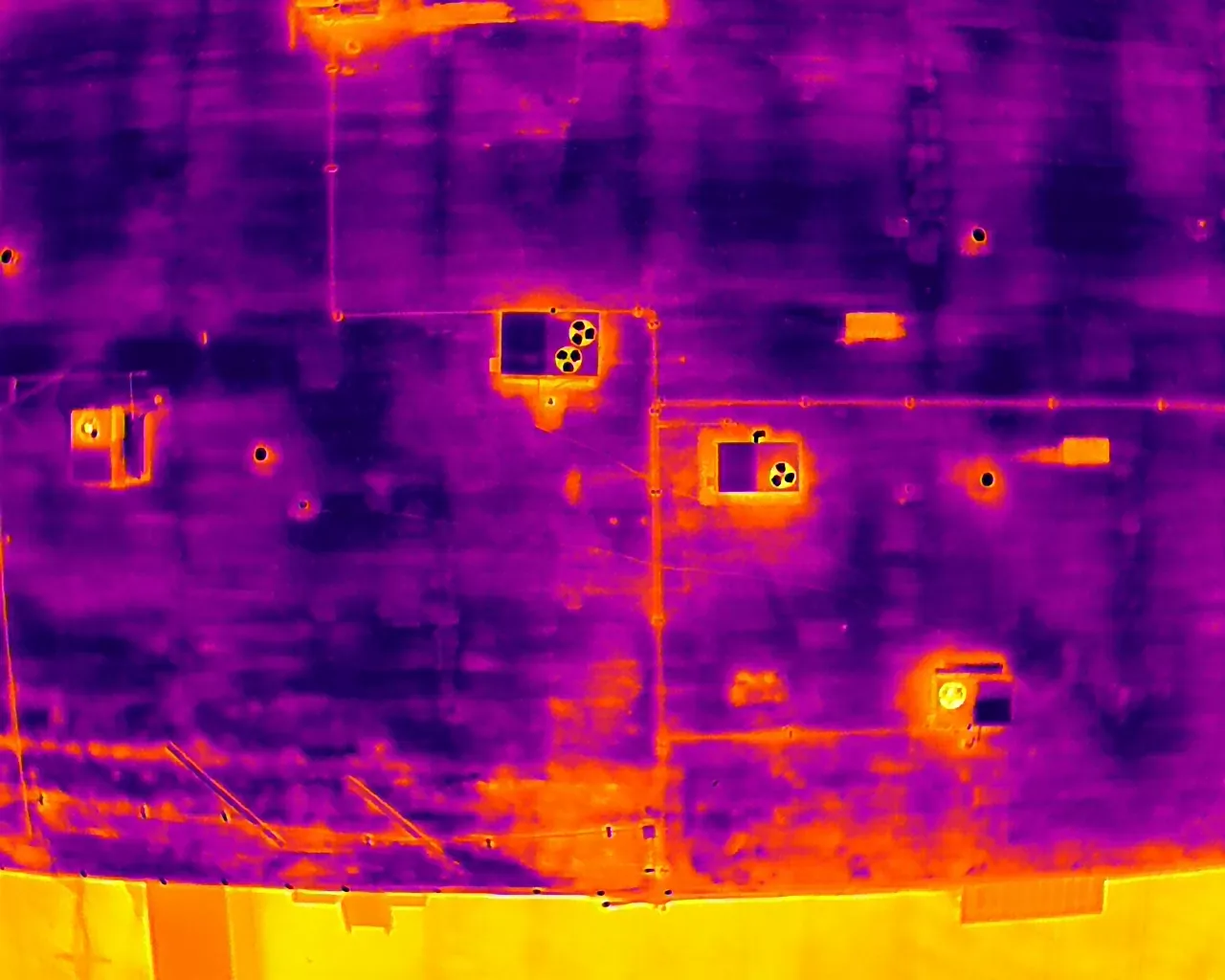
Wet and dry roof materials can store and release heat differently under suitable conditions, creating temperature patterns worth investigating. An infrared survey records those patterns at the roof surface rather than directly photographing water inside the assembly. The relationship depends on the covering, insulation and surrounding construction. We examine those characteristics before treating a thermal contrast as a useful indication of possible moisture.
Different insulation materials, patches, shading and equipment exhaust can also produce temperature differences. Areas beneath ballast or certain reflective surfaces may be difficult to interpret through the same method. We assess whether the proposed scan can meaningfully distinguish the condition relevant to the owner's decision. A physical inspection of the assembly can establish the necessary starting information. Where infrared examination is unsuitable, other investigation methods may provide a better basis for defining repair or removal.
Sun exposure, surface dryness, wind and changing temperature affect the contrast available for interpretation. Moisture surveys therefore need a suitable working window rather than an arbitrary appointment time detached from conditions. We discuss the planned scan and how changing weather could affect it. A wet surface may interfere with distinguishing concealed moisture, while persistent shade can alter the thermal behavior of one roof section.
Equipment operation can create another variable, particularly beside exhaust outlets or areas influenced by warm discharge. We identify those features during preparation and compare them with the observed patterns. The building may need access arrangements different from those used for an ordinary daytime maintenance visit. Lighting, roof transitions and safe movement also deserve attention where the survey occurs in low-light conditions. The work sequence should allow useful observations without sacrificing safe access to the relevant assembly.
A thermal anomaly becomes more useful when physical examination establishes what exists beneath that location. Core cuts or other selected openings can identify retained layers, insulation condition and moisture at the examined point. We choose locations that help interpret both suspect areas and comparison areas where the thermal response differs. The findings are considered together rather than allowing one isolated opening to define a whole roof section.
Every opening needs an appropriate repair so investigation does not create a new water path. We identify how the covering will be restored with compatible materials before examination proceeds. Some assemblies require additional precautions because of deck conditions or particular interior uses. The owner should know the proposed extent and the purpose of each examination area. That provides a controlled investigation expense directed toward a construction decision, with the roof protected after the selected material checks are complete.
Wet insulation may appear in separate areas associated with old leaks, damaged details or drainage problems. We compare thermal observations with physical findings and roof geometry to establish a practical investigation map. The map distinguishes confirmed wet locations from areas still requiring checks. Removal quantities need an appropriate basis, especially where materials vary or boundaries extend beneath equipment and adjoining construction.
For a proposed roof recover, the relevant issue is whether unsuitable material can be removed while sound construction remains. Broad saturation or uncertain supporting conditions may shift the comparison toward replacement of the affected assembly. We explain that relationship through actual findings and the work needed to reach sound material. A colored thermal image can assist the decision, but it should not replace confirmation of the proposed retained construction.
Midtown Centennial's historic office parks and commercial spaces provide a local setting where roof investigation may occur above active tenant rooms. We discuss the uses beneath proposed openings and whether equipment or finishes need protection. An examination over an occupied office can require a different release arrangement from work over a service space. The investigation should account for those differences before the covering is opened.
At commercial properties in Highfield Business Park, operational needs can include laboratory equipment, goods handling or office schedules. We establish which actual activities are affected and coordinate access accordingly. Flex and industrial buildings can also have varied interiors beneath one roof, making location-specific checks useful. That coordination supports the physical survey; it does not change the need for representative examination. The owner can release the required investigation areas with a clear understanding of the protection involved.
A moisture assessment should explain the methods used, locations examined and conditions that affect interpretation. Photographs and observations from openings connect the thermal map to actual retained materials. We identify where further checks are needed before assigning a removal boundary. The resulting roof condition findings can support a comparison of repair, recover and replacement options without treating uncertain areas as confirmed quantities.
Confirmed wet sections may require insulation and cover-board replacement before the new covering is installed. We consider transition heights, attachment and drainage where selective removal changes the assembly. The owner receives an explanation of that supporting work as well as the surface correction. A survey is most useful when it changes a material-retention decision, a removal allowance or the location of further investigation needed before construction proceeds.
Temperature contrast can indicate a location needing examination, but several dry construction conditions can produce similar patterns. We compare the roof assembly and surrounding influences, then use appropriate physical checks. Confirmed findings support the moisture interpretation before construction quantities are assigned.
Available thermal contrast governs whether the proposed method can provide useful observations. Weather, shading, surface condition and the assembly all affect that judgment. We reassess the working window or investigation method rather than proceeding solely because the visit was scheduled.
Compatible materials restore the opening after the retained layers and conditions have been checked. The repair method is chosen for the existing assembly and receiving surface. We plan that restoration as part of the investigation so the selected opening does not remain an exposed water route.
The extent, separation and supporting conditions of those locations guide the retention decision. Limited wet areas may permit selective removal where surrounding construction remains suitable. Widespread saturation or uncertain boundaries can require a larger replacement comparison before an overlay is approved.
Thermal mapping alone may leave boundaries uncertain, particularly around equipment or changing materials. Physical checks help establish representative conditions and practical limits. We explain which quantities have adequate support and where more examination is needed before a firm removal scope is settled.
Commercial roofing in Centennial
Commercial roofing in Centennial
Commercial roofing in Centennial
Commercial roofing in Centennial
Commercial roofing in Centennial
Commercial roofing in Centennial
Commercial roofing in Centennial