
Assess built-up roofing in Centennial. We examine asphalt plies, surfacing and concealed moisture before defining the repair boundary or replacement scope.
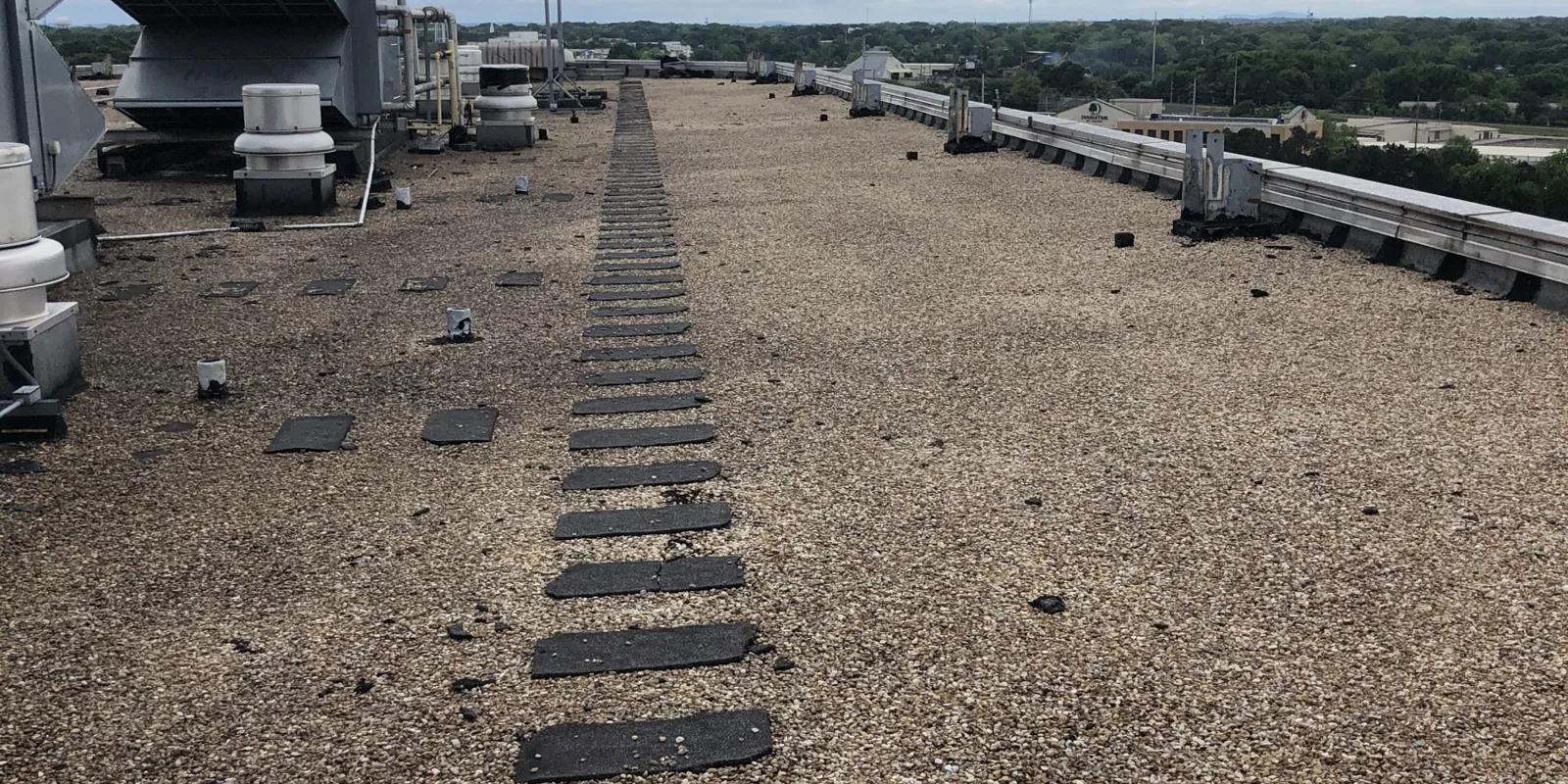
A built-up roof's upper surfacing can hide the condition of the layers that provide its weather protection. The owner needs an assembly assessment before deciding whether visible repairs represent an isolated need or a larger construction expense. Commercial Roofing Centennial examines built-up roofing in Centennial, CO, to establish that distinction. We identify the relevant plies, receiving construction and detail condition before proposing retention or removal.
Midtown Centennial includes established office parks within a district now subject to a long-term planning vision. At an occupied office property there, a roof decision may need to fit a planned budget cycle without postponing necessary correction. We examine the actual built-up assembly and its affected areas. The comparison explains what a useful repair would address and which conditions would instead require reconstruction below the visible surface.
Built-up roofing uses multiple plies with bituminous material as part of its weatherproof construction. Its assembly includes the specified base, reinforcement, surfacing and adjoining components. We identify those layers during examination rather than treating every asphalt-looking roof as the same system. Previous repairs or a later cap layer can complicate that identification, making representative openings useful during assessment.
A comparison with modified bitumen roof construction should explain the actual layer arrangement being proposed. Installation procedures and repair components follow the selected assembly. We establish those requirements before choosing material for a localized correction. The owner receives a construction scope that reaches the relevant roof layers, not merely the finish visible after gravel or other surfacing is moved aside.
Aggregate and other roof finishes can protect underlying material while making some defects harder to examine. Preparation may require moving surfacing to reach the receiving layers at a repair location. We assess that work before fixing the boundary. Loose debris and displaced surfacing also need attention where they obstruct outlets or affect roof access.
An exposed finish may show cracking or wear that requires examination of the material beneath it. Those surface signs do not independently describe every concealed ply. We inspect relevant areas and identify where further opening is necessary. Where a silicone coating option is considered, receiving-surface suitability and required preparation remain separate construction questions. A new surface treatment should not conceal damaged layers that belong in the removal scope.
Water within insulation or other concealed layers can make a surface-only repair unsuitable at the affected area. We assess relevant observations and openings to identify the extent of that condition. A visible leak location may not describe the entire wet area. The investigation establishes where removal needs to reach damaged material and where retained construction remains suitable.
A moisture-pattern investigation may help direct confirmation where roof and weather conditions suit the method. The resulting observations need appropriate interpretation and follow-up examination. We explain how those findings enter the proposed construction boundary. The owner can compare a localized opening with broader removal on the basis of assessed layers, rather than assume that the absence of another ceiling stain establishes dry insulation elsewhere.
A blister can involve separation within roof layers, while a split may extend through material at a stressed or unsuitable connection. Their appearance alone does not establish the same repair method. We assess the surrounding construction and identify whether the receiving layers can support the correction. Removing or opening a defect should follow a suitable procedure for the assembly.
Repeated cracking near a change in plane can indicate a detail needing reconstruction rather than another surface treatment. We examine the adjoining support and movement relationship. The proposed repair explains which layers are renewed and how the connection reaches suitable material. If deterioration is broad, the owner receives that finding before authorizing multiple isolated patches that leave the larger condition problem outside every individual repair allowance.
Parapet walls, equipment curbs and roof edges require weather connections appropriate to the built-up system. The field plies cannot compensate for a failed adjoining termination. We examine those transitions and identify deteriorated support or inadequate height. Their correction may need a different work boundary from the open field roof.
Perimeter metal and coping work can belong in the same project where adjoining components have deteriorated. We distinguish roof flashing work from necessary wall or equipment corrections and coordinate their sequence. The completed construction should carry its intended connections through the transition rather than end at an unsuitable existing component. Those details also need a practical arrangement for later examination and maintenance.
Asphalt application methods bring particular handling and safety requirements that need coordination with the building's operation. We identify the selected system and suitable installation procedure before establishing the work window. Ventilation, roof access and material movement can influence that arrangement. The plan needs to suit the actual assembly rather than assume every asphalt project proceeds through the same method.
Littleton has commercial connections through Santa Fe Drive and C-470 within the wider south-metro setting. Individual properties still have their own access constraints. For commercial buildings in Midtown Centennial, we examine staging and occupied routes at the actual site. Occupied reroofing coordination connects those routes with daily opening and closure requirements, while preserving clear responsibilities for any equipment release needed at the work area.
Localized correction can be appropriate when the affected detail is repairable and surrounding roof construction remains suitable. It should address the identified cause rather than serve as an unexplained delay before replacement. We establish the repair boundary and explain the material retained around it. That distinction helps the owner understand what the proposed expense will actually accomplish.
A built-up roof replacement assessment considers removal, concealed-layer correction and the new assembly together. The proposal identifies the work that a repair would leave unchanged. Future condition checks should include outlets, transitions and service areas as well as the open field. The owner can then manage the remaining roof with an informed maintenance arrangement and a clear basis for the next construction decision.
Underlying plies and insulation can have conditions not apparent at the upper finish. Relevant openings or other examination may be necessary. We assess the actual assembly before defining repair suitability or the extent of required removal.
Their layer relationships and surrounding condition can differ. A suitable repair follows examination of the affected construction rather than the defect's broad label. We identify the receiving material and the boundary needed for the selected procedure.
Damaged concealed material may require removal before the weatherproof layers are restored. A surface repair can otherwise leave that condition beneath the roof. We establish the affected boundary through appropriate assessment and explain the resulting construction work.
Material may need to be moved to expose the receiving surface and examine its condition. Displaced aggregate also needs control around drains and access routes. We include the necessary preparation and handling in the repair scope.
Wider deterioration or unsuitable concealed construction can make isolated corrections an incomplete response. We explain those findings and the assembly work they require. The owner can then compare a useful local repair with the construction left outside its boundary.
Commercial roofing in Centennial
Commercial roofing in Centennial
Commercial roofing in Centennial
Commercial roofing in Centennial
Commercial roofing in Centennial
Commercial roofing in Centennial
Commercial roofing in Centennial