Assess commercial roofing in Greenwood Village, CO. Connect office-roof repairs and renewal with receiving layers, equipment preparation and occupied access.
Greenwood Village office roof work needs a defined physical phase whose field removal and adjoining details can be completed around the occupied building. Commercial Roofing Centennial assesses commercial roofing in Greenwood Village, CO. We examine repair and renewal options through their supporting layers and weather interfaces. The owner can compare useful construction with preparation beneath the covering included, keeping its operating release connected to the actual material task that the selected phase must finish.
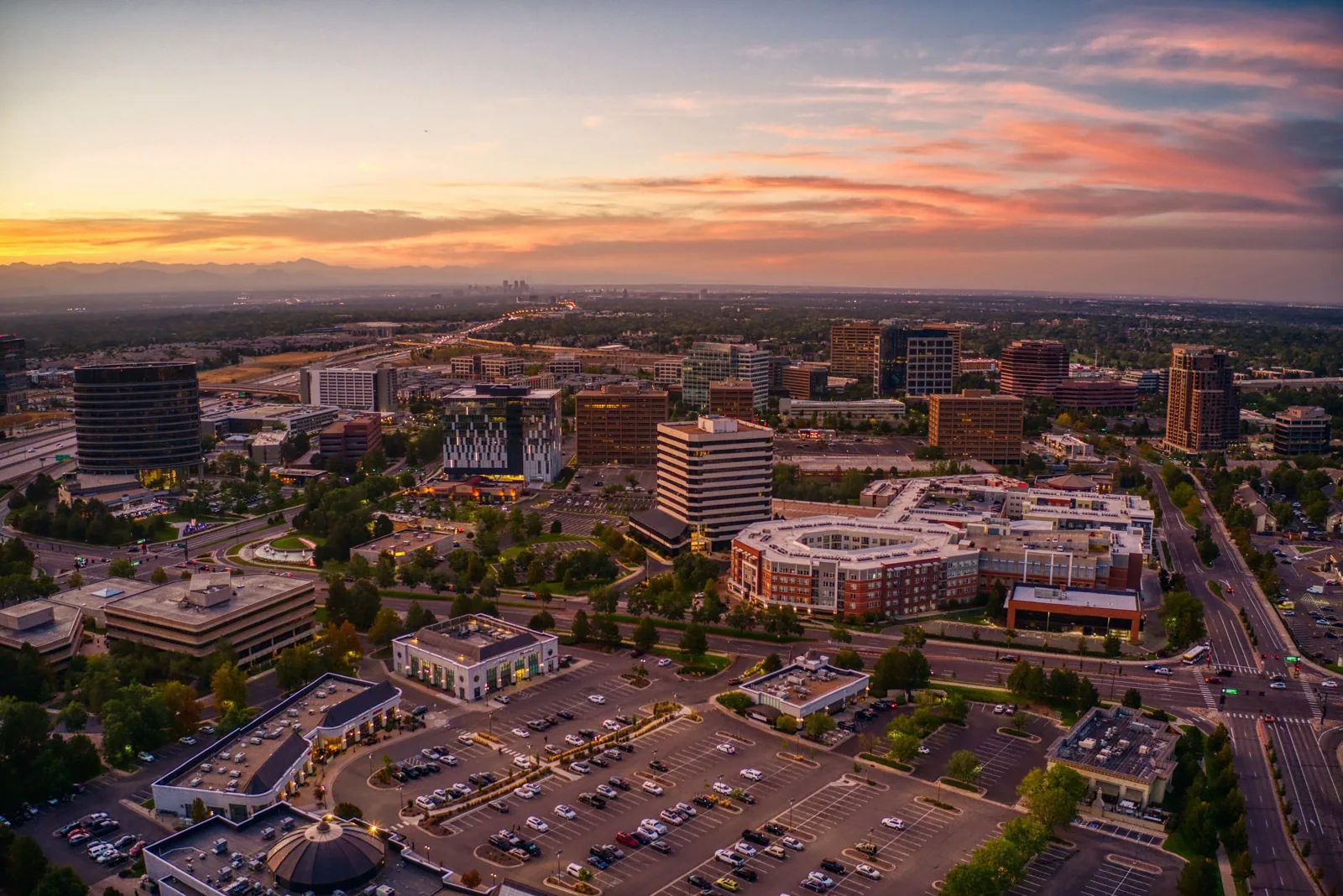
Parts of the Denver Tech Center, Greenwood Plaza and Village Center contribute to Greenwood Village’s business geography. The city has three light rail stations, with I-25 passing through and I-225 alongside it. We assess the selected property’s final roof approach before arranging material movement. A regional connection supports location and access planning, while the actual entrance, staging position and roof route determine how the proposed work can be supplied.
A covering proposed to remain needs suitable condition around the corrected seam, curb or perimeter. We examine the relevant supporting assembly before recommending that retention. Wet insulation can extend beneath material that looks serviceable above it. A local opening may therefore require more board removal than its visible surface area initially suggests. The useful correction reaches support appropriate to its completed detail.
Assessment of supporting insulation and boards identifies damaged material and replacement fit. At a retained edge, the new board should meet suitable adjoining construction without leaving a gap beneath the weather connection. We examine available attachment through the actual receiving surface. Adhered components need appropriate application conditions, while mechanical securement requires suitable engagement. Those preparation requirements belong with the proposed field assembly before broad quantities are fixed.
A rubber roof assembly choice also needs compatible components at its seams and details. The owner should understand which layers the option removes, retains and installs. We describe that construction through the actual boundary, allowing a local expense to be compared with broader renewal where unsuitable support or widespread deterioration changes how much of the receiving assembly can usefully remain.
Additional layers can reduce the vertical space beneath equipment even when its curb’s footprint stays unchanged. We examine the proposed thickness and receiving height before choosing flashing. A unit or line may obstruct preparation at that detail. Its responsible service parties coordinate adjustment where necessary, leaving the roof connection available for installation and examination.
Curb and equipment-interface preparation also includes suitable support below the raised element. The upper enclosure needs examination where water can enter above a sound lower connection. We identify that component and the preparation it requires. The selected detail should provide continuity through its compatible material and upper weather boundary, with practical working clearance around the surface that receives the new flashing.
At a selected Greenwood Village office property, an equipment release can differ from the available room period below field work. We connect those dependencies with the actual correction. The owner can compare a phase whose service adjustment enables the intended roof detail, avoiding a sequence that installs broad covering first and leaves an inaccessible curb interface waiting above the occupied office area.
Water observed indoors can travel from an entry point elsewhere above the affected room. We examine relevant seams, walls, penetrations and outlet connections before selecting correction. The stain helps locate the investigation without independently defining the material opening. Concealed damage may change preparation beneath the visible weather detail.
Investigation of a commercial roof water route can distinguish an open joint from water admitted above the flashing. At a wall, the useful task may require upper enclosure preparation before the lower connection is renewed. At a drain, the surface approach should be examined alongside its compatible flange detail. An older buildup or added board can obstruct water reaching an otherwise suitable opening.
We describe those receiving and geometry tasks within the actual corrective scope. Cleaning can restore a route blocked by debris, while changed elevation or damaged support may require construction. The owner compares useful material work that addresses the identified weather path, connecting the repair boundary with the support and drainage preparation it needs. Different observations can therefore lead to different complete responses within one selected building.
Empower, Merrick and Company, Fidelity Investments and CoBank are among Greenwood Village’s local businesses. For an individual commercial roof, its occupied operation determines the actual release beneath the proposed opening. We identify that material boundary before the property team coordinates rooms, equipment or interior protection. A revised concealed finding should lead to another construction comparison before the opening expands into additional occupied space.
Repeated delivery and waste handling need suitable receiving space at that selected property. We examine the exterior lifting position and roof approach before materials arrive. The route may be different from the one used for an inspection visit. Occupied entrances and recurring service activity should be coordinated around the actual handling operation, with an appropriate alternative arrangement available where access would otherwise be interrupted during necessary preparation.
For roofs around the Denver Tech Center and commercial properties in Centennial, each location also establishes its applicable project process. We identify relevant examinations before receiving construction is concealed. The Greenwood Village phase should connect its review stages with suitable weather closure and the operating release available at the actual building, keeping preparation and installation coordinated through the selected assembly.
Comparison of later roof phases begins with the construction supplied during the current work. We examine the finished covering and compatible details before release. The owner should know where receiving support changed and where existing layers remain. An adjoining task awaiting another stage needs an identifiable component, with material information corresponding to the assembly actually installed.
Later equipment changes should preserve support and appropriate weather connections at the renewed field. We assess the altered shape and working clearance before another compatible detail is chosen. Service routes need covering protection and accessible outlets. The owner receives care guidance for the renewed interface and the service route needed to preserve its examination access. Subsequent assessment can then identify wear or damage at a particular assembly area, connecting another useful correction with its receiving preparation and the occupied release necessary to complete the new work boundary.
Suitable deck, insulation and receiving boards need assessment with the selected attachment. Damaged layers may change removal. We identify that supporting work before the owner compares useful repair with a complete renewal phase.
Added layers can reduce the height available for compatible flashing beneath equipment. Adjustment may need another service release. We assess those physical relationships before field installation reaches the receiving interface.
An upper enclosure connection can admit water behind a lower roof detail. Concealed travel can also separate entry from the stain. We examine relevant weather paths before fixing the corrective material boundary.
Repeated deliveries and waste movement need dependable space through preparation and installation. Entrances or service activity can restrict that route. We assess the selected property’s actual approach before removal begins.
Renewed support, installed covering and retained edges should remain identifiable for examination. Equipment changes need compatible details. We explain those physical boundaries before the owner selects another useful material expense.
Commercial roofing in Centennial
Commercial roofing in Centennial
Commercial roofing in Centennial
Commercial roofing in Centennial
Commercial roofing in Centennial
Commercial roofing in Centennial
Commercial roofing in Centennial
Commercial roofing in Centennial