
Plan roof capital expenses for Centennial properties. We compare repair boundaries, receiving work and operating releases before defining useful renewal phases.
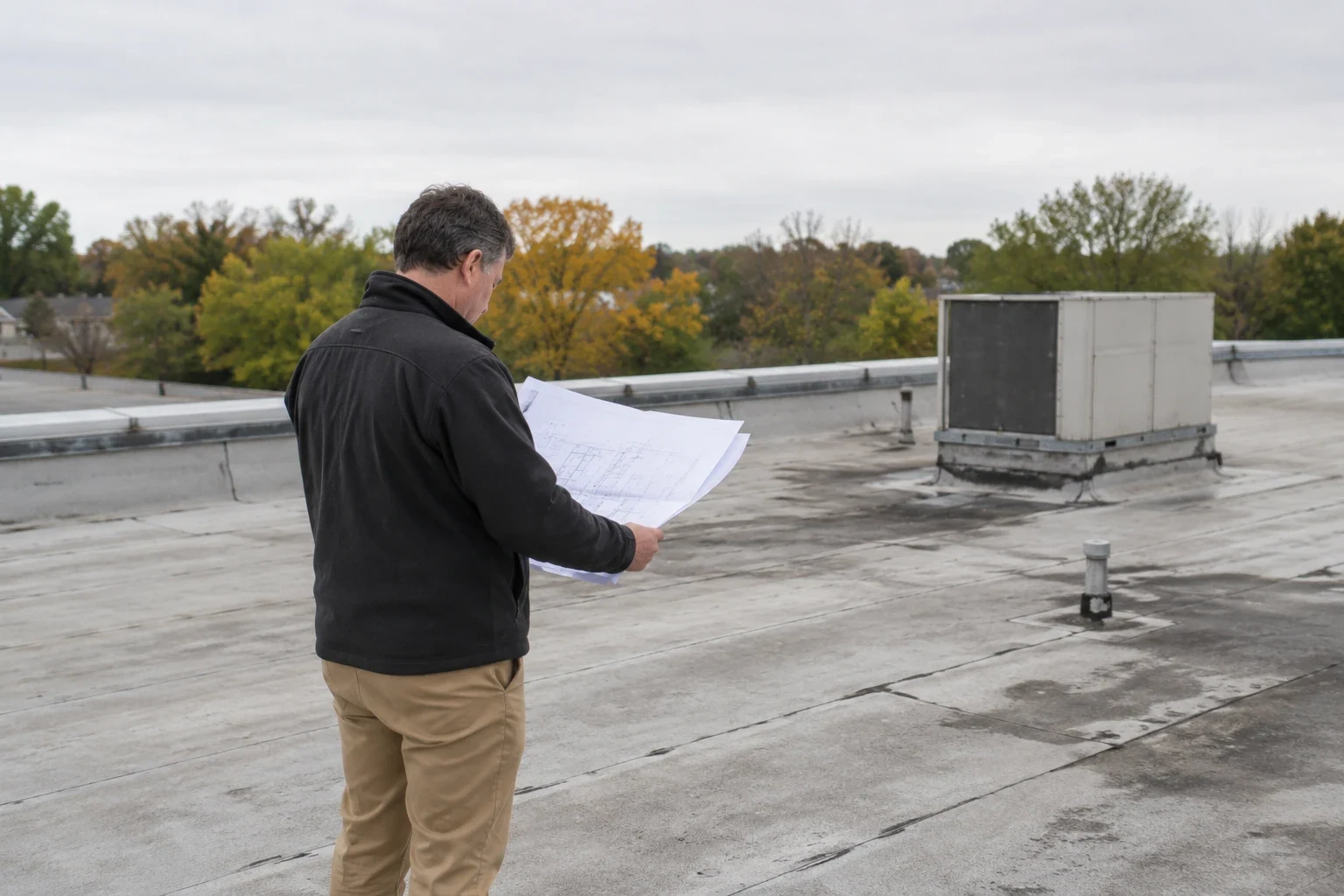
Delaying field replacement can leave an equipment curb requiring correction sooner, while renewing that field now may need a service release the building cannot yet supply. We identify both conditions before the owner selects a capital phase. Commercial Roofing Centennial assesses commercial roofs for capital planning in Centennial, CO. We compare useful repair and renewal boundaries with their receiving requirements and the operating arrangements needed to complete the proposed construction.
The District-Centennial plan includes future office and hotel development, with much of its wider land still unbuilt. Lone Tree also identifies professional services and healthcare within its existing economy. Roof capital decisions at selected occupied properties follow their actual assemblies and material condition. We examine those buildings before comparing expenses, keeping proposed roof phases connected to the construction they renew and the related work required beneath or beside the covering.
Known defects can require attention within an assembly otherwise suitable to remain. We examine the covering, receiving layers and adjoining detail before selecting local work. A recurring defect may instead reveal wider deterioration or an unsuitable connection. The capital comparison should distinguish that condition from a repair with a useful material boundary.
Assessment for a roof capital decision identifies the findings needed before repair or replacement is selected. The owner should understand the defect corrected by the proposed local task and the construction it retains around it. We explain further investigation where concealed material condition remains unresolved. Written assembly findings can identify the specific seam or outlet tied to that choice. A local drainage adjustment may need a changed receiving elevation as well as covering work. We describe those connected tasks before assigning the correction to a phase, allowing the owner to compare material quantities that reach the actual component needing preparation. That physical distinction gives the budget choice a clear basis, connecting the current expense with actual material needs at the selected roof.
A useful repair can restore a particular joint, penetration or edge without renewing the broad field. We examine adjoining material before recommending that boundary. Wider moisture, deterioration or attachment concerns can change the comparison with a larger phase. Each option should describe the receiving construction and completed weather connection it supplies.
Defined local roof correction and broader roof renewal need identifiable removal and retention assumptions. A replacement allowance can include damaged insulation that a local patch would leave outside its scope. We explain those differences before the owner compares quantities. The proposed capital phase then follows useful assembly work, with the material retained and the related correction required beneath the new covering made clear.
New covering requires suitable support, insulation and attachment. We assess the retained assembly before defining the layers proposed above it. Damage or an unsuitable receiving surface may require preparation or removal. The capital scope should include those physical tasks before the field material is selected.
Insulation and receiving-layer planning also considers the finished elevations at curbs and outlets. Added thickness can require adjoining adjustments. A rubber roof assembly option uses its compatible detail components and joining procedure. We identify those requirements alongside the field installation. The owner can compare complete construction expenses whose quantities reach their actual interfaces, with necessary preparation included beneath and around the selected material.
Splitting a roof project can be practical where the assembly allows suitable separation and closure. We examine the selected edge before assigning a smaller phase. A shared outlet, change in height or material transition may need construction outside the apparent field quantity. The useful phase must finish its weather boundary through those actual connections.
Tracking retained and renewed roof areas keeps that result clear for later decisions. A temporary connection between phases needs appropriate management until the next work reaches it. We identify the receiving material and compatible detail planned at the separation. The owner receives a phased comparison that describes each completed assembly, including preparation and interface tasks that remain necessary even when field removal is divided across separate expenses.
A budget period does not establish that every room or equipment connection is available for work. We identify the opening and release associated with each proposed task. The responsible property parties coordinate interior protection and equipment service. Their arrangement must support preparation, installation and suitable examination before the phase is closed.
For an occupied office roof, a field phase may be available while one curb awaits another equipment window. We explain that dependency rather than leaving the detail unresolved above new covering. The capital sequence should connect the service release with the material work it enables. Concealed findings can change the receiving scope; their construction consequence needs review before additional roof area is opened or another occupied arrangement is requested.
Centennial requires a commercial reroof mid-roof inspection and identifies virtual mid-roof and final inspection options. Applicable examination belongs in the planned construction sequence. We identify the relevant work that must remain accessible before later layers conceal it. The capital phase also needs suitable closure around that review stage.
For commercial properties in Lone Tree, the responsible team should identify its applicable project process alongside actual roof access. Different jurisdictions can have different requirements. We assess the selected building's handling route and staging before defining the phase. Material lifts and recurring waste movement need usable space throughout construction, with the available operating release connected to those practical tasks before the expense is approved.
When a phase is finished, the owner should know which construction has been renewed and what remains outside it. We examine the covering and details before release. Installed material information and care requirements follow that actual assembly. Related tasks awaiting another phase remain identifiable for the next planning period.
Later equipment changes should preserve compatible connections and practical drainage access. Service visits need suitable protection of the covering. We explain those obligations at completion. A subsequent assessment can identify the next material correction within retained layers or adjoining roof areas. The owner compares that expense with the physical work already supplied, keeping each assembly's useful receiving condition clear. A remaining outlet adjustment or damaged transition should be evaluated through its actual construction need and the operating release necessary to complete the next phase.
The repaired defect and suitable material retained around it should be identifiable. Wider deterioration may remain outside that boundary. We explain the construction result before the owner compares local work with broader renewal.
The selected covering needs suitable support and attachment beneath it. Moisture or damaged insulation can change required removal. We identify those tasks before the owner compares complete assembly options.
Its weather boundary may still cross curbs, outlets or transitions needing correction. Suitable closure requires those interfaces to be addressed. We examine the actual separation before dividing field quantities into phases.
A curb or penetration may require a service release separate from field installation. That dependency needs connection with the roof task. We identify appropriate preparation and related responsibilities before work reaches the interface.
Renewed boundaries, retained construction and installed material information should remain clear. Later observations can then be assessed against the actual assembly. We explain those conditions before another maintenance or capital expense is selected.
Commercial roofing in Centennial
Commercial roofing in Centennial
Commercial roofing in Centennial
Commercial roofing in Centennial
Commercial roofing in Centennial
Commercial roofing in Centennial
Commercial roofing in Centennial
Commercial roofing in Centennial