Assess KEE roofing options in Centennial. We compare the selected membrane product, supporting assembly and repair interfaces before defining construction work.
A KEE-containing roof proposal should identify the actual product and complete assembly before the owner compares its price with another membrane. The material description alone does not explain attachment, underlying preparation or the details included in construction. Commercial Roofing Centennial assesses KEE roofing in Centennial, CO, through those specific requirements. We establish what the selected product needs and which existing components would remain beneath it.
Highfield Business Park accommodates technology, laboratory, assembly, office and distribution activity. A roof serving one of those uses may have exposure and equipment constraints that influence material selection. We examine the actual service conditions and coordinate product suitability questions before defining the assembly. The owner receives a comparison grounded in the building's requirements rather than a general claim that one polymer description settles every roof decision.
KEE is associated with certain thermoplastic roof membrane formulations, including products described as KEE-containing or PVC-alloy systems. The selected product's information establishes its characteristics and installation requirements. We identify that product rather than treating all descriptions in the category as identical. Thickness, reinforcement and components should be compared within the actual proposed system.
The comparison also distinguishes the supplied material from a broad chemical description used in marketing. Relevant product documentation and project requirements guide suitability. PVC roof assembly options may enter the same material discussion, but their proposed construction needs separate examination. We explain the differences that affect the project scope so the owner can compare defined assemblies with clear installation assumptions.
Equipment discharge, maintenance substances and surrounding roof activity can create exposures that matter to material selection. We identify those conditions with the owner and equipment parties before settling the specification. The relevant product information should address the proposed application. A roof membrane's category does not establish resistance to every possible contact condition.
For manufacturing property roofing, the actual roof equipment and servicing practices need examination alongside the occupied operation. We identify where contact protection or an operating adjustment may be necessary. A suitable material still needs appropriate maintenance and weather connections. Concentrated discharge may require review of how equipment directs its exhaust or handles liquid residue. We coordinate those questions with the responsible service party before the renewed roof surface receives the same unmanaged exposure. The construction scope explains those related tasks instead of assigning the selected membrane responsibility for exposure that should be managed at the equipment.
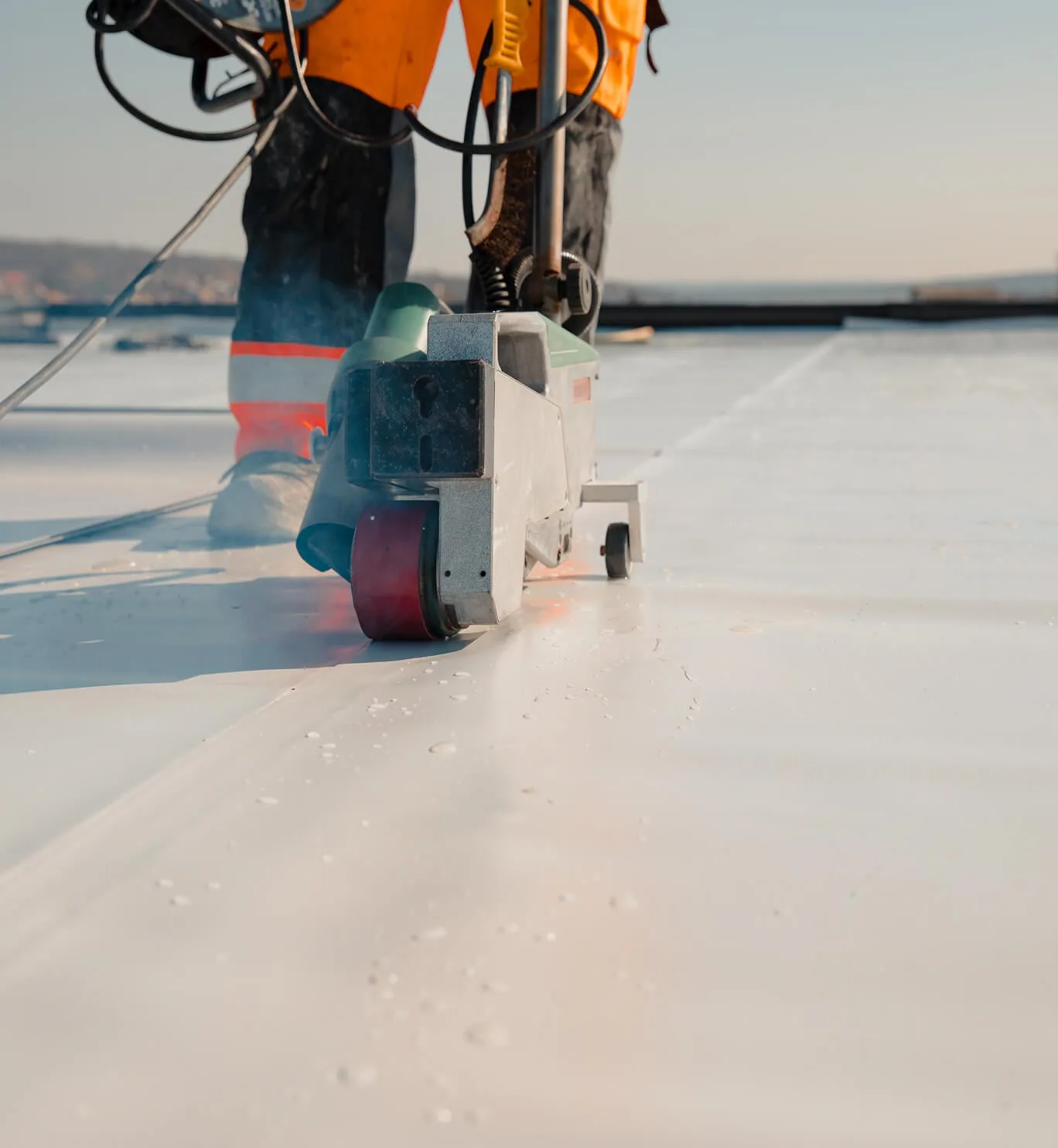
Thermoplastic connections need suitable joining procedures for the selected membrane. Preparation, receiving-surface condition and welding settings affect the completed detail. We assess those requirements at field seams and transitions before planning the work. An older surface may need additional preparation or removal before compatible material can be joined appropriately.
Completed connections require examination using the appropriate procedure. Changes in plane, intersections and densely spaced components can make that work more demanding than a long open seam. We identify access needed at those details while the construction sequence can still accommodate it. A repair plan should also evaluate the reason a previous connection failed. Restoring its surface join alone may leave an unsuitable support or adjoining component unchanged.
The proposed covering needs a suitable receiving assembly whether the project removes every old layer or retains selected construction. Moisture and deterioration can change a retention proposal after examination. We assess relevant openings and identify the actual insulation, deck and existing covering relationships. Those findings establish where reconstruction is needed beneath the new membrane.
Recover and overlay assessment considers more than whether another covering will fit above the existing roof. Added thickness affects adjacent clearances and drainage elevations. We explain those changes alongside the selected membrane's installation requirements. When comparing a KEE-containing product with TPO roofing construction, the owner should understand the retained-layer assumptions and supporting work in each proposal, not only their different material descriptions.
Curbs, pipe penetrations and support points require compatible weather details suited to their geometry and movement. We examine existing construction before specifying the membrane components used at those interfaces. Deteriorated support or insufficient flashing height can expand the work beyond the visible covering. The proposal identifies those adjustments before installation reaches the equipment area.
Roof equipment support coordination can involve the appropriate service trade and structural design party as well as roofing. We establish which work must precede the membrane connection and when the detail becomes accessible. The completed interface should remain serviceable after equipment returns to operation. Crowded placement should not conceal the renewed flashing or prevent the examinations required during future maintenance.
Centennial's employment mix includes professional services, healthcare, wholesale activity and construction. Parker also identifies engineering and healthcare among its industry clusters. A property serving those sectors can have different roof access windows across its occupied areas. We assess delivery routes and equipment availability for the actual building before setting the construction sequence. The selected material's handling and application conditions also enter that plan.
For properties in Highfield Business Park, staging may need coordination with service vehicles or goods movement. A reroof plan for continuing operations identifies those dependencies at the affected work area. We connect the removal boundary with the time needed for preparation, installation and closure. The roof allowance then reflects a sequence that can proceed practically within the property's operating arrangement.
Repair components need compatibility with the actual membrane that was installed. A similar appearance or a broad category name does not establish the correct joining procedure. We identify the existing material and receiving condition before proposing a correction. Prior treatments may need removal if they interfere with preparation or conceal deteriorated construction.
At completion, the owner should understand the assembly provided and the maintenance access needed at its details. Equipment traffic and sharp debris require suitable protection of the surface. Drainage and flashing need continued examination as the building operates. We explain those practical care requirements without assigning a universal service-life claim to KEE-containing membranes. Later decisions can then use the actual installed construction and its observed condition.
The actual product, relevant characteristics and complete assembly requirements should be clear. A broad polymer description does not define thickness, attachment or components. We establish those details before comparing the proposal with another roof system.
Actual exposure and the selected product's information guide suitability. Different equipment or servicing conditions can create different requirements within the same building category. We identify those conditions and coordinate relevant product questions before fixing the specification.
Added roof thickness changes the vertical distance available at existing flashing. Some curbs or other interfaces may need adjustment. We assess those clearances alongside the retained layers before presenting the overlay as a field-only installation.
Material identity and receiving condition are examined before the connection method is selected. Prior treatments or deterioration can require preparation beyond the visible defect. We define a boundary that reaches suitable construction for the proposed compatible repair.
The roof still needs accessible outlets, examined details and protection during equipment servicing. Product selection does not eliminate damage from unsuitable traffic or debris. We explain the care relevant to the installed assembly when construction is completed.
Commercial roofing in Centennial
Commercial roofing in Centennial
Commercial roofing in Centennial
Commercial roofing in Centennial
Commercial roofing in Centennial
Commercial roofing in Centennial
Commercial roofing in Centennial