
Assess TPO roofing in Centennial. We compare membrane attachment, supporting layers and detail work before defining a repair or replacement construction scope.
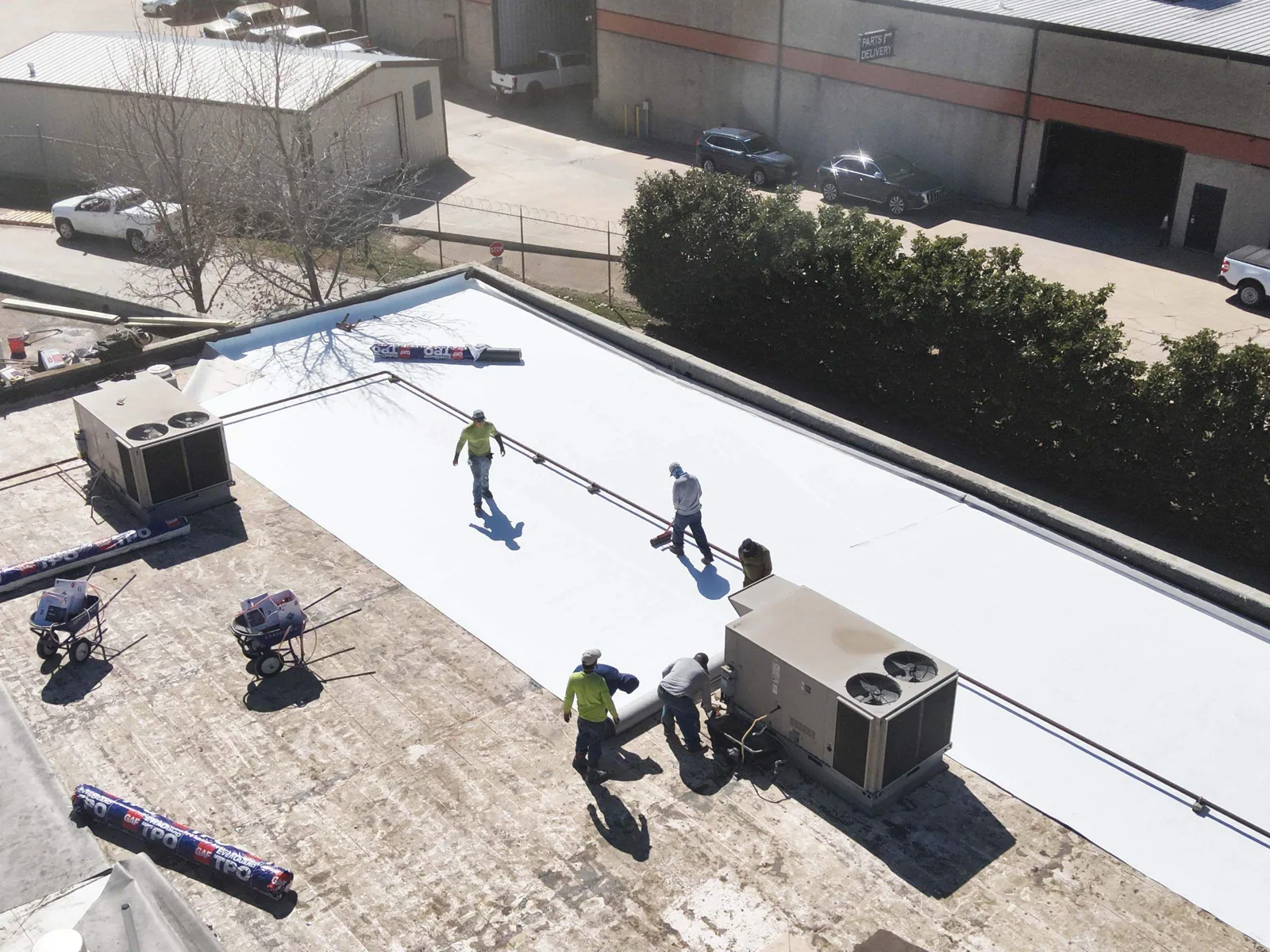
A TPO proposal becomes useful for pricing when the owner knows how the membrane will be secured and what construction supports it. Membrane selection alone leaves insulation, deck condition and adjoining details unresolved. Commercial Roofing Centennial assesses TPO roofing in Centennial, CO, as a complete single-ply assembly. We establish the appropriate removal or repair boundary before defining the covering and its installation sequence.
Meridian's broader business area combines commercial development with retail and housing within a campus setting. An occupied property there may need its roof project to fit equipment access and normal site activity. We examine those dependencies alongside the existing roof layers. The resulting TPO comparison includes the connections and supporting construction required at the building, rather than a field membrane allowance that assumes every other component can remain.
TPO can be installed through different attachment arrangements where the selected system and building conditions permit them. A mechanically attached assembly needs appropriate deck engagement and its specified fastening pattern. An adhered assembly requires suitable receiving surfaces and installation conditions. We identify the proposed arrangement and explain its construction requirements before treating the options as interchangeable.
Existing layers may affect which approach is suitable. An uneven or deteriorated receiving surface can require correction even when the owner intends to retain part of the assembly. Insulation and cover board work establishes those layers as part of the proposed construction. We examine their condition and attachment along with the membrane choice. Alternatives such as PVC membrane assemblies and EPDM rubber assemblies need their own compatible components and joining methods. The owner can then compare complete installation scopes with a clear understanding of the preparation contained in each price.
TPO seams are joined using the appropriate heat-welding procedure for the selected material. Surface condition, equipment settings and installation conditions influence the work. Dirt or incompatible old treatments can interfere with a repair connection. We examine the receiving material and establish the preparation needed before planning a welded patch or new seam.
The crew checks completed welds through the suitable inspection procedure rather than relying solely on their surface appearance. Intersections, corners and changes in plane require particular attention because several material edges may meet there. For failed seam correction, we assess why the connection opened and whether the surrounding membrane remains suitable for repair. Rewelding a short visible gap should not leave an unsupported or deteriorated connection immediately beside it.
Equipment curbs, walls and perimeter edges require compatible details that connect with the field covering. Their height and condition can affect how the proposed membrane is installed. We assess those interfaces before fixing the field roof thickness. A low curb or deteriorated adjoining wall may need additional construction before a suitable flashing connection can be completed.
Penetration and skylight connections need appropriate components and adequate space for preparation. Crowded equipment lines can complicate the detail even on an otherwise straightforward roof. We identify the necessary release or access adjustment during scope planning. The completed TPO field must join those transitions through the intended weatherproof connection, with suitable upper terminations and an arrangement that remains reachable for later examination.
The existing drainage arrangement remains important when TPO replaces another covering. Added insulation can change outlet elevations or redirect water around curbs. We compare the proposed finished surface with the available drain and scupper connections. Where the roof has a low area, the construction decision should address its cause rather than assume a new membrane will remove it.
Tapered boards or localized drainage corrections may be appropriate within the replacement scope. We identify their layout and adjoining heights before selecting the field insulation quantities. A defined replacement construction plan coordinates those decisions with removal and daily closure. The owner receives a roof that is planned around its actual water routes, including the details and equipment that divide the available drainage area.
Lone Tree's economic activity includes professional services, healthcare and retail, with transit connections serving its wider commercial setting. At an occupied building with those uses, material delivery and roof access can share space with daily arrivals. We assess the actual entrance and staging arrangement before planning installation. Those operating conditions help establish where materials can be stored and which roof access route is practical.
For buildings in the Meridian Business Area, equipment service needs also enter the construction sequence. Office building roofing may require coordination with occupied rooms beneath individual work areas. We identify those requirements while planning the assembly, not after the membrane is delivered. Suitable handling and daily closures protect the proposed construction while allowing clearly defined areas of the building to remain available.
An existing TPO roof may receive localized correction where the surrounding material and concealed construction remain suitable. Punctures, open seams and isolated flashing defects require different examination from widespread deterioration or wet insulation. We establish the affected boundary before selecting a repair method. The proposed connection needs compatible material that can be prepared and joined appropriately.
Previous coatings or patches may increase the preparation necessary at a repair location. We explain which treatment must be removed and whether a broader opening is required below it. If the assembly has a larger condition problem, the owner receives that distinction before approving another small patch. The roof assessment compares the useful repair with the replacement decision it would otherwise postpone, using actual construction findings rather than an assumed membrane age.
Equipment traffic can damage a single-ply covering when personnel or components repeatedly contact an unprotected area. Suitable walkway protection and clear maintenance routes can reduce that avoidable exposure. We identify the roof areas used for servicing and coordinate their protection with the installation. Drain outlets and flashing should remain accessible after those routes are established.
Periodic examination can identify loose debris, damaged connections or wear before a defect expands into a wider opening. Repair materials should remain compatible with the installed TPO system. We explain the relevant maintenance considerations at completion without assigning an unsupported service-life promise. The owner has a defined assembly, practical access to its vulnerable details and a clear basis for arranging later condition checks.
The attachment method changes preparation, receiving-surface requirements and how the assembly is secured. Mechanical fastening also needs appropriate deck engagement. We identify the complete proposed arrangement so the owner compares construction scopes rather than membrane descriptions alone.
The surrounding material must remain suitable for preparation and the proposed connection. Contamination, deterioration or an unsuitable underlying detail can require more work. We assess the cause and condition before selecting a seam correction.
The finished roof elevation affects the available vertical space for flashing. New insulation or retained layers can reduce that clearance. We coordinate necessary curb adjustments with the proposed assembly before installing the field covering.
A new covering does not reshape the roof by itself. Low areas and outlet relationships need a separate construction decision. We assess elevations and include appropriate drainage work where the proposed scope requires it.
Designated access and compatible walkway protection can help protect the covering in service areas. Components and debris should not abrade the membrane. We identify those practical maintenance arrangements during installation planning and explain them at completion.
Commercial roofing in Centennial
Commercial roofing in Centennial
Commercial roofing in Centennial
Commercial roofing in Centennial
Commercial roofing in Centennial
Commercial roofing in Centennial
Commercial roofing in Centennial
Commercial roofing in Centennial