
Assess split and open seams on Centennial commercial roofs. We examine joining surfaces, material movement and concealed layers before defining useful repairs.
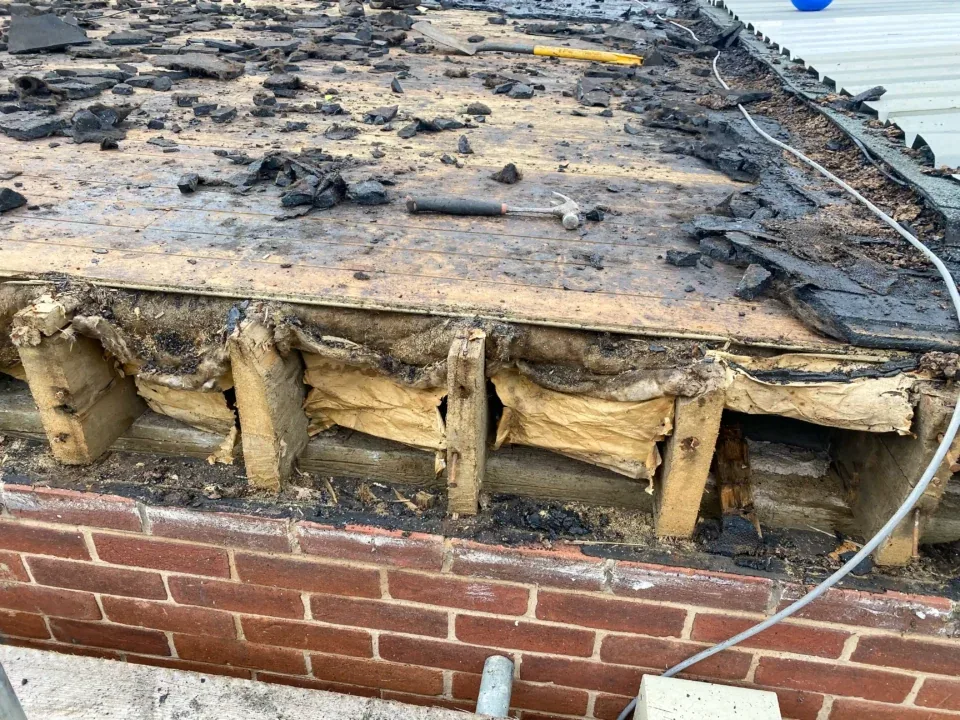
A split running beside a roof joint may need a different correction from a clean opening within the joint itself. Selecting another seam treatment first can leave that distinction unresolved beneath the repair. Commercial Roofing Centennial assesses split and open commercial roof seams in Centennial, CO. We examine the installed material and the failed connection before defining preparation, receiving-layer correction and a useful completed boundary.
Office and residential uses share the broader setting of Inverness Business Park. Highfield Business Park includes technology, laboratory, assembly and distribution activity. Roof seams at selected properties across that commercial region still need assessment of their actual systems. We identify joining surfaces, attachment and relevant concealed condition, allowing the owner to compare a correction tied to the mechanism observed at the building.
An open lap can involve incomplete joining, contaminated receiving material or movement affecting the connection. A split alongside it can indicate another material or attachment condition. We examine where the opening lies and the construction around it before selecting work. The useful scope should identify the receiving surface the correction will reach. At an intersection of several pieces, changes in material thickness can leave a small channel through an otherwise closed-looking joint. We examine those layer transitions, available working clearance and the components needed to complete them appropriately. The repair procedure should fit the intersection as well as the straight seam. Removing unsuitable adjoining material may be necessary before that shape can receive the selected compatible detail.
Roof connection examination includes adjacent field and detail conditions relevant to the failure. We identify old treatments and the installed material before choosing further assessment. A short visible gap does not establish that every adjoining portion remains suitable. The owner receives a defined repair boundary based on examined construction, with preparation and broader joining work identified where the surrounding surface or connection requires it.
Thermoplastic seam repair requires material and preparation appropriate to the selected system. Dirt, contamination or older surface treatments can interfere with a useful welded connection. We examine that condition before fixing the procedure. Damaged or unsuitable material may need removal and a larger compatible repair component.
A TPO seam correction and a PVC seam correction should follow their actual product requirements. The receiving surface and application conditions need suitable preparation before joining. Completed work also needs appropriate examination. We describe the material retained and the connection supplied, giving the owner a construction scope that includes the necessary receiving work instead of assuming visible seam closure alone establishes an adequate repair.
Rubber membrane joints use appropriate bonding components and preparation, while bituminous systems have different material and installation requirements. We identify the covering before choosing a repair method. An earlier patch can complicate compatibility or hide the edge needing correction. The new procedure should reach suitable material rather than rely on the appearance of the old treatment.
System-specific seam repair includes removal or cleaning necessary for its receiving connection. Loose adhesive or unsupported material can require work beyond the first open edge. We explain those preparation tasks alongside the proposed components. A useful local expense restores an identifiable joint, with a clear boundary between renewed construction and the assembly retained around it.
A seam can be stressed by attachment or receiving-layer conditions near it. We examine the adjoining field before proposing another surface connection. Loose support, displaced boards or an unsuitable transition may require correction below the covering. A new joining component should have a stable receiving arrangement suited to its actual detail.
At a change in roof height or a movement joint, the connection needs appropriate geometry and components. A nearby flashing repair may be part of the same weather boundary. We identify whether the split and detail share a construction cause or need separate useful tasks. The owner can compare complete work that preserves the intended movement arrangement and reaches suitable support beneath the renewed surface.
Water through a failed joint can affect insulation or supporting construction beyond its visible edge. We examine relevant concealed condition before defining retention. Indoor observations may be separated from the entry by water travel through layers. The useful opening follows the affected material and the receiving boundary needed for the new connection.
Investigation of water through roof joints identifies further assessment or removal below the surface. A retained-water correction can also belong beside seam work where drainage geometry affects the damaged area. We describe the water-route adjustment separately from the joining procedure. The owner receives a material comparison that addresses relevant concealed condition and the actual weather connection requiring restoration.
Midtown Centennial has established office development within a broader planning area. At a selected commercial property, a seam opening may need room protection beneath its removal boundary. We identify that space and the material route before scheduling the task. The owner coordinates occupied access around the actual roof work.
For commercial roofs in Inverness Business Park, a repair above an occupied office area should have appropriate components and closure available before preparation begins. Joining also requires conditions suited to the selected procedure. Concealed findings may enlarge the opening; revised protection and material requirements need coordination before removal expands. The useful phase remains connected to its receiving condition and the construction that can be appropriately completed within the available arrangement.
We examine the completed connection and its adjoining material before the repair is released. The owner should know where the useful correction begins and ends. Related receiving-layer or drainage work remains identifiable within that scope. The installed components need information appropriate to the actual covering and joining procedure.
Later roof visits should protect the seam from sharp parts, concentrated contact or incompatible treatments. New equipment interfaces need appropriate preparation where they connect with the repaired field. We explain those care considerations at completion. Future condition review can examine the renewed joint alongside nearby movement and drainage arrangements. The next repair decision follows observed material needs, preserving a distinction between an isolated connection defect and a broader receiving condition that calls for another construction boundary.
Their failure locations can indicate different joining or material conditions. Assessment should identify the construction needing correction. We examine the surrounding field before selecting the compatible receiving boundary for repair.
Contamination, older treatments or damaged material may prevent a useful welded connection. Preparation or removal can be required first. We assess the actual surface before choosing the completed repair procedure.
Rubber, thermoplastic and bituminous systems have different joining requirements and compatible components. The installed material must be identified. We define preparation appropriate to the actual assembly before selecting work.
Loose receiving layers or movement at a transition can continue stressing a new connection. Those conditions may need correction beneath the covering. We identify the relevant assembly before recommending another surface treatment.
Water admitted through the opening can affect insulation or support. Concealed findings establish the useful material boundary. We explain necessary investigation and protection before the correction extends beyond the visible joint.
Commercial roofing in Centennial
Commercial roofing in Centennial
Commercial roofing in Centennial
Commercial roofing in Centennial
Commercial roofing in Centennial
Commercial roofing in Centennial
Commercial roofing in Centennial
Commercial roofing in Centennial