Compare cool roof options in Centennial. We assess reflective coverings, retained roof condition and installation needs before defining a practical project.
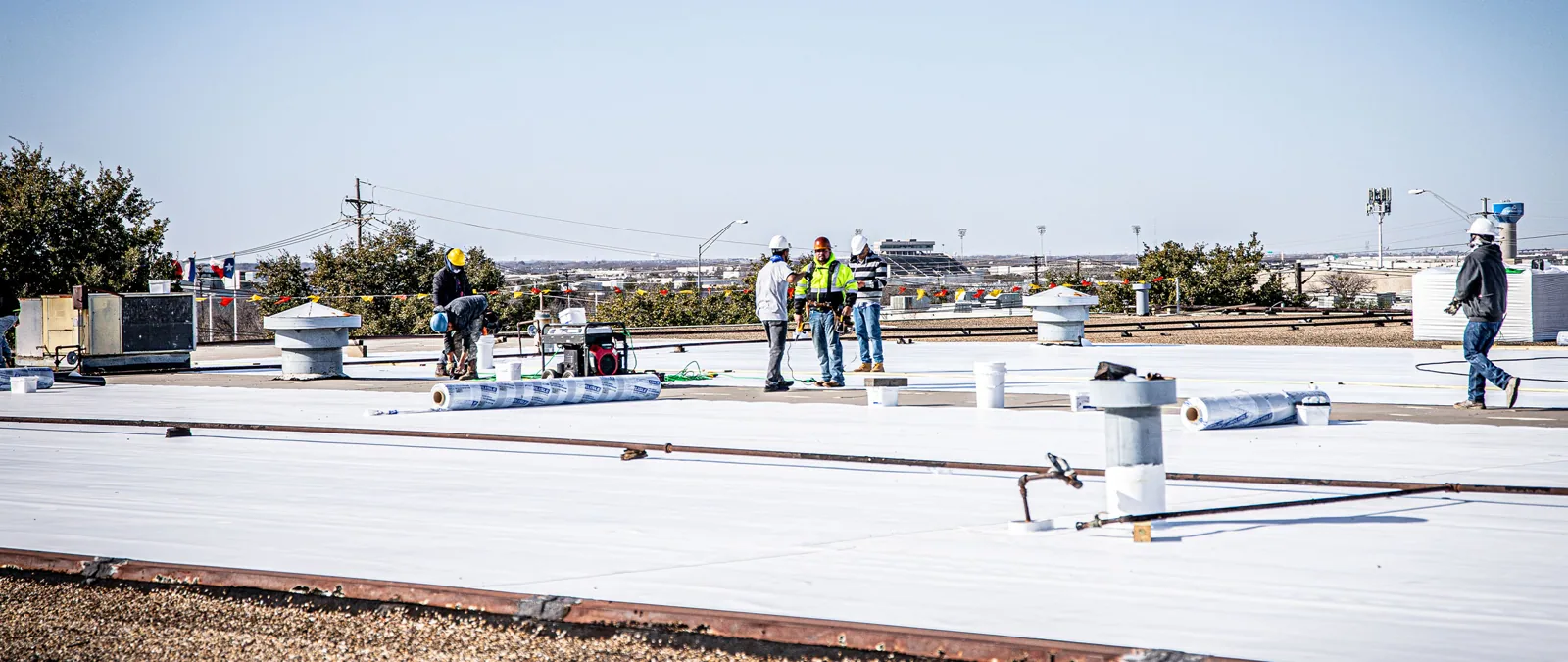
A reflective covering can be considered when an owner replaces a roof, restores a suitable surface or evaluates heat entering an occupied building. Those are different construction decisions with different requirements below the finished surface. Commercial Roofing Centennial plans cool roof installation in Centennial, CO, by examining the existing assembly and the intended work boundary. We compare appropriate materials without treating surface color as a substitute for roof condition.
Greenwood Village contains business districts including the Denver Tech Center, Greenwood Plaza and Village Center. At an occupied office property in that setting, cooling operation can be one consideration alongside leaks, remaining material condition and the next replacement window. We assess those actual needs together. The comparison explains whether a reflective roof belongs in an already necessary project or requires a separate construction allowance.
Solar reflectance describes how a surface reflects incoming solar energy, while thermal emittance concerns its release of absorbed heat. Product information can help compare those characteristics for proposed coverings. The building's overall response also involves insulation, equipment operation and other construction. We avoid assigning a fixed energy saving to a reflective surface without a suitable evaluation of the building.
A light appearance alone does not establish the performance information needed for the specification. Initial properties and aged properties can differ, so the comparison should use the relevant product information. We explain which covering is being proposed and where its performance characteristics enter the decision. For commercial office roof projects, that comparison can sit beside maintenance access and occupied-work constraints rather than replacing those practical considerations.
A new reflective membrane may be installed during replacement when the existing covering or concealed materials require removal. A coating restoration needs a suitable receiving roof that can accept preparation and the chosen material. We assess moisture, adhesion conditions and necessary repairs before considering that route. Reflectivity does not make an unsuitable retained assembly sound. Coating preparation can require trial areas to establish whether the selected system adheres to the existing surface. Application thickness and coverage also need attention at textured areas and repaired details. Those requirements enter the restoration scope before the owner compares it with replacement.
Preparation for roof coating restoration includes the details that would otherwise remain beneath the new surface. Loose materials, damaged seams or incompatible old treatments can change the scope substantially. A replacement comparison identifies its own removal and reconstruction needs. The owner can then review the work contained in each option instead of comparing two surface prices that assume different conditions beneath them.
Material selection includes the attachment, substrate and adjoining details required for the complete assembly. A reflective membrane cannot be selected independently of those connections. We identify the existing deck and proposed insulation before specifying the installation method. Where a retained layer is considered, its condition and compatibility need examination before it becomes the basis of the new construction.
TPO membrane installation and PVC membrane installation each involve suitable components and joining procedures. A material comparison should explain those construction differences as well as the relevant surface properties. We assess terminations, drainage outlets and equipment transitions for the proposed system. Perimeter securement remains important even where the field covering has the desired surface properties. Roof edges, changes in plane and terminations need the appropriate construction for the selected assembly. We include those connections in the material and installation comparison. The finished reflective field should connect with durable, serviceable details rather than leave the existing weak points outside the installation allowance.
Reflective covering and insulation address different parts of the building's thermal behavior. The upper surface affects absorbed solar energy, while insulation resists heat transfer through the assembly. We examine insulation condition and proposed thickness during the roof assessment. Reusing wet or damaged boards would leave a construction problem beneath the selected surface.
Added thickness can also change curb heights, drain elevations and access clearances. Roof insulation and cover board work therefore needs coordination with the covering proposal. We identify necessary adjoining adjustments rather than pricing insulation as an isolated field layer. The owner receives a complete assembly comparison with those costs included. A thermal objective can then be evaluated against the actual removal, installation and detail work required to achieve the proposed construction.
Centennial's identified employment sectors include professional services, healthcare, construction, hospitality and retail. Different operating uses create different access and protection requirements during roof work. We assess occupied rooms, equipment release needs and material delivery routes for the actual property. Those conditions influence how much area can be opened and completed during a work period.
In the SouthGlenn Sub-Area, commercial centers coexist with surrounding neighborhoods. A project there can require coordination between roof access, customer arrivals and nearby occupied space. We establish suitable preparation and daily closures before commencing the installation. The selected material's application conditions also affect that sequence. A coating and a membrane may need different handling even when both are being considered for a reflective finished surface.
Accumulated dirt, standing water and incompatible later repairs can change the condition of a reflective surface. Later coatings or repair materials should remain compatible with the original covering and its intended performance. An unrelated treatment can interfere with a future connection or complicate cleaning. Maintenance needs therefore belong in the material comparison from the beginning. We identify safe access and cleaning considerations appropriate to the selected system. The plan should also preserve drainage and protect the covering from routine equipment servicing.
Inspection after installation checks the completed seams or coating coverage together with adjoining details. Later examination can identify developing defects before they expand into a larger repair boundary. We explain the maintenance responsibilities relevant to the proposed assembly without assigning an unverified service life or financial return. The owner can judge the cool roof option as a defined construction and care commitment alongside the building's other operating priorities.
Building conditions influence the result, including insulation, equipment use and the existing covering. Product surface properties do not establish a specific bill reduction for an individual property. We compare documented material characteristics and identify where a building-specific evaluation is appropriate.
A suitable retained roof may be considered for an appropriate restoration coating after assessment and necessary repairs. Moisture, adhesion or material deterioration can prevent that approach. We establish the receiving roof's condition before comparing restoration with a new covering.
The finished surface can change through weathering and use. Relevant aged product information helps distinguish the initial appearance from the performance characteristics used in the comparison. We identify the proposed product rather than selecting solely from a color description.
Insulation and the upper surface perform different functions in the assembly. Damaged or unsuitable insulation still needs attention when the covering changes. We assess retained layers and proposed thermal construction alongside the reflective material choice.
Access for examination, suitable cleaning procedures and protection during equipment service all deserve consideration. Drainage problems also need correction independently of reflectivity. We explain the care requirements relevant to the proposed covering before finalizing the project scope.
Commercial roofing in Centennial
Commercial roofing in Centennial
Commercial roofing in Centennial
Commercial roofing in Centennial
Commercial roofing in Centennial
Commercial roofing in Centennial