Evaluate roof coating restoration in Centennial. We assess adhesion, moisture, detail repairs and application conditions before recommending surface treatment.
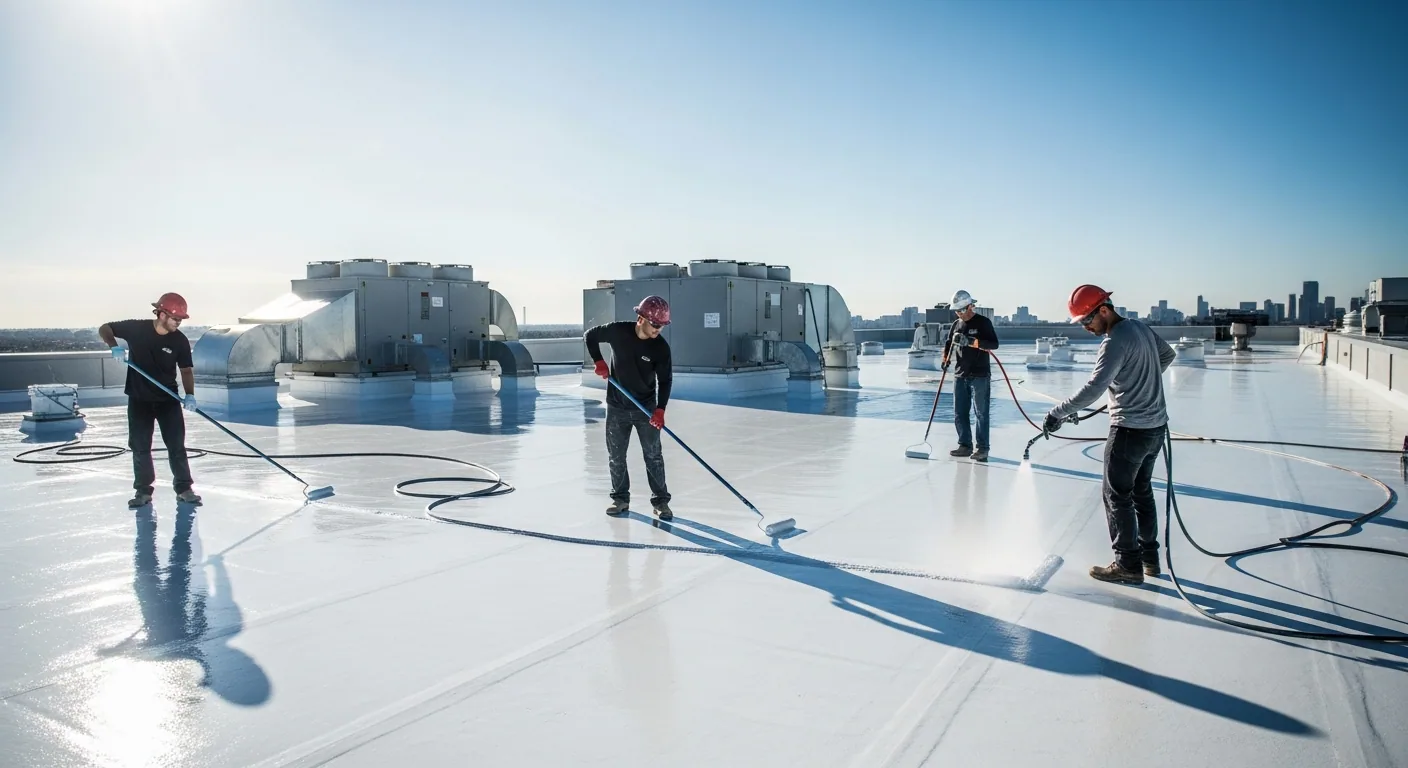
Renewing a weathered roof surface requires an allowance for preparation and detail repair before coating material reaches the roof. Those earlier steps can determine whether restoration is a suitable planned expense for the existing assembly. Commercial Roofing Centennial evaluates commercial coating restoration in Centennial, CO, by examining the material that would remain beneath it. We assess soundness, moisture and compatibility before recommending a treatment or comparing it with replacement.
Sheridan has commercial and industrial facilities alongside residential and community uses, including a broad retail district at River Point. A building serving those activities can benefit from carefully scheduled restoration where its roof remains suitable. We identify the defects requiring construction first and establish how application can proceed around occupied operations. The owner can then compare a complete restoration scope rather than approve a finish that leaves weak seams and wet material underneath.
A covering with widespread deterioration, unstable support or poorly bounded wet insulation may be unsuitable for coating alone. We inspect the existing material and select appropriate checks where moisture or adhesion needs further examination. Sound retained construction provides the working base for preparation, compatible detailing and application. Areas that do not meet that condition need separate correction or a different construction approach.
An existing coating also requires identification and assessment before another product is applied over it. Surface chalking, loose finish and contamination can interfere with bonding. Adhesion checks help establish whether the proposed preparation produces a suitable receiving surface. We consider transitions between old patches and the original covering, because compatibility can differ across those areas. The owner's decision should account for those differences before selecting a system for the whole proposed restoration boundary.
An open seam or loose flashing termination needs a compatible repair rather than reliance on coating to bridge an unstable connection. We examine corners, penetrations and changes in plane where movement or inadequate support may have opened the detail. Suitable reinforcement can form part of a specified restoration system, but the underlying construction still needs to be sound. Repairs and coating must connect as an intended assembly.
Where seam defects need correction, we establish their extent and the method appropriate to the existing membrane. A failed drain connection or damaged curb can require additional material replacement before coating preparation proceeds. Planned detail repairs should receive their own defined boundaries in the restoration proposal. This lets the owner evaluate the expense that makes the roof suitable, alongside the expense of renewing its protective surface.
Roof soils, biological deposits and residues can prevent the proposed coating from forming a suitable bond. Preparation therefore needs to reach the surface condition required by the chosen system, including removal of loose existing material. Cleaning methods must also protect the assembly and manage water so investigation or preparation does not create an indoor problem. We assess fragile surfaces and open details before any cleaning work begins.
After cleaning, the receiving material needs the dryness and preparation appropriate to the selected coating and primer. Different roofs can require different treatment of exposed metal, existing membrane or an older coating. Areas with rust may need additional correction before they can receive the finish. We establish those requirements through material assessment and suitable testing. A clean-looking roof is not automatically ready for application if the surface remains damp, unstable or incompatible with the proposed system.
Silicone coating systems and acrylic systems have different application and exposure requirements. We assess the roof's drainage, existing surface and intended service conditions before comparing suitable options. The selected product needs the specified coverage, reinforcement and application method for the assembly involved. Areas receiving heavy equipment-service traffic may require an appropriate protection arrangement beyond the ordinary coated field.
For acrylic restoration work, drying conditions and the roof's water behavior deserve particular consideration during planning. Other systems have their own surface and curing requirements. We establish which preparation and application stages can proceed within the available weather window. A partial application must receive suitable protection until its remaining work is complete. The sequence should respect the selected system rather than compressing the work into a schedule that omits the conditions needed for performance.
The SouthGlenn Sub-Area contains neighborhood commercial centers, while its mixed-use setting includes shopping, dining, living and working activities. Occupied properties there may need entrances, loading access and equipment operation maintained during restoration. We discuss where staging and application affect those activities before scheduling the work. Air intakes and adjacent service areas deserve attention where the selected materials or methods create a specific operating dependency.
At commercial buildings in Sheridan, the assessment identifies the building's actual service routes and work boundaries. Several roof sections may permit phased preparation and application, while a connected drainage area can make coordination more important. We explain those relationships so the owner's operating plan fits the roof work. Suitable containment, equipment access and temporary closures belong in the scope where they change installation, not as assumptions added without examination.
A restored coating still needs examination at outlets, traffic areas and transitions where wear or damage can recur. We check the finished work for the required application and detail treatment before the area is released. The completed condition should be recorded so later visits can distinguish installation from subsequent damage. Any remaining drainage or equipment issue receives a separate recommendation instead of being treated as resolved by the new finish.
Continued roof maintenance supports the restored assembly by keeping water paths clear and addressing compatible detail repairs. The interval and tasks should reflect exposure, service activity and observed condition. We explain when the surface needs reassessment and what changes would justify further investigation beneath it. Restoration can be a useful construction choice for a suitable roof, but its scope should remain connected to retained-material condition and later care through the intended application, compatible subsequent repairs and regular examination of the renewed surface.
The patch needs sound support and a compatible connection before surface treatment proceeds. Loose or unsuitable material may need removal and replacement. We examine that detail and distinguish its repair from coating preparation so the underlying opening does not remain unresolved.
Drainage behavior influences material suitability and may require correction before application. We assess outlet condition, elevations and the surrounding assembly. A coating can renew a suitable surface, but it does not create slope or restore a failed drain connection by itself.
Separating cleaning, primers and required repairs can clarify the complete restoration allowance. We identify each task that makes the receiving surface suitable for application. The comparison then includes necessary preparation instead of placing it outside an apparently lower surface-treatment price.
Confirmed wet sections require examination and appropriate correction before they remain beneath new treatment. Limited affected areas may permit selective removal within a suitable broader assembly. Extensive saturation can change the project into a replacement comparison rather than a coating decision.
Compatible repair materials and suitable traffic protection become part of preserving the renewed surface. We identify the installed treatment and its care requirements, alongside drainage and detail checks. New equipment work should also protect the covering so service activity does not undermine the completed restoration.
Commercial roofing in Centennial
Commercial roofing in Centennial
Commercial roofing in Centennial
Commercial roofing in Centennial
Commercial roofing in Centennial
Commercial roofing in Centennial