Assess acrylic roof coating in Centennial. We review curing conditions, roof drainage and receiving surfaces before defining preparation and restoration work.
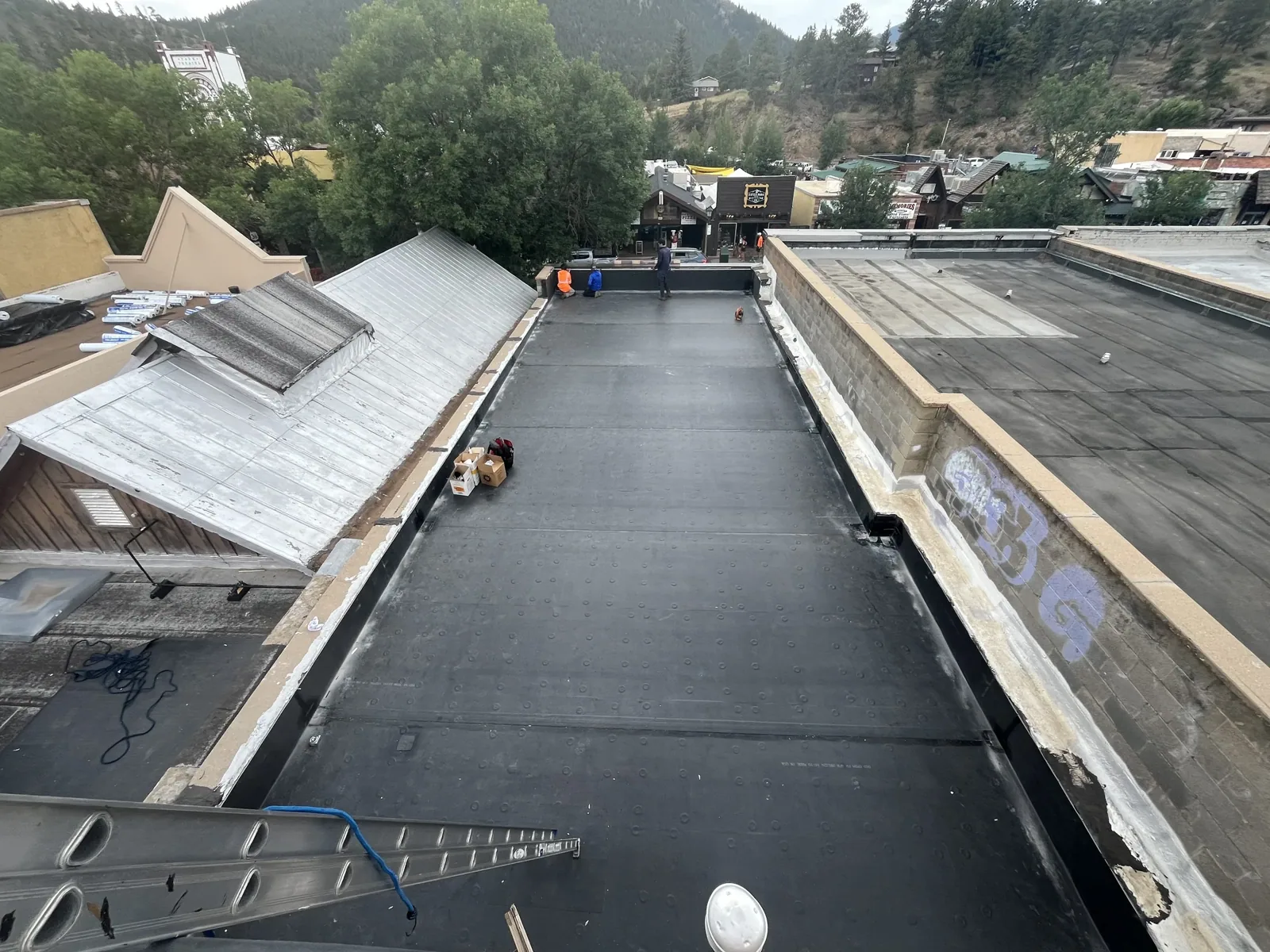
The available curing window can shape an acrylic roof restoration before the crew applies its first field coat. Weather exposure, receiving-surface moisture and the selected product's requirements need coordination with the property's operating schedule. Commercial Roofing Centennial assesses acrylic roof coatings in Centennial, CO, through those installation conditions. We establish the roof's preparation and drainage needs before defining a practical restoration scope.
Castle Pines has commercial uses including restaurants, banking, apartments, assisted living and professional services. A property serving that mix may need coating work around equipment servicing and occupied entrances. We examine the actual roof and site arrangement before proposing application. The owner receives a sequence that includes repairs, preparation and suitable curing conditions rather than a material allowance that assumes the roof is ready whenever labor becomes available.
Acrylic products need conditions suited to their specified application and cure. Surface moisture, temperature and approaching precipitation can influence whether work should proceed. We identify the relevant requirements for the selected system before establishing the work plan. A suitable period for cleaning may not be the same period available for coating application and cure.
The plan should account for successive coats and the condition required before the next layer is applied. We explain those stages to the owner alongside the occupied schedule. Preparation that finishes late in an otherwise available day should not force application into unsuitable conditions. The construction allowance includes the practical sequence needed to complete the specified system, not simply a calendar promise detached from its installation requirements.
Roof material and surface condition affect whether the selected acrylic system is appropriate. Contamination, older treatments and deteriorated covering can require preparation or prevent the proposed route. We assess those conditions before selecting components. Product suitability should follow the actual substrate and exposure rather than a general assumption that every coating can be applied to every roof.
A roof restoration suitability assessment identifies required repairs and the construction proposed to remain. Where moisture affects concealed layers, additional examination or removal may be necessary. We explain those findings before pricing application across the field. The owner can compare restoration with replacement through a clear description of retained material and required correction, rather than treat a changed surface finish as proof of a renewed assembly below it.
The selected coating's information should guide its suitability for the expected water exposure. The roof's drainage condition therefore needs examination before the material is fixed. Low areas, obstructed outlets and pockets behind equipment can create exposure different from the broad field roof. We identify those locations and coordinate the appropriate construction response.
Drainage outlet corrections or changes to local geometry may belong in the project before application. A comparison with silicone roof coating systems needs the same review of the actual roof and relevant product requirements. The owner should understand why a material is being proposed for its particular conditions. Neither coating category should be used as an explanation for leaving an unsuitable water route unexamined.
Cleaning and drying form part of the coating connection, not a cosmetic step before the roof changes color. We identify contamination, unstable treatments and areas requiring suitable primer or other specified preparation. Trial preparation and relevant adhesion checks may help confirm the proposed process. Their findings can change the work necessary before field application.
The preparation scope also includes the handling of loose material and debris around outlets. A coating applied over an unsuitable surface may not provide the intended connection even when its coverage looks uniform. We establish the actual procedure and explain the areas needing additional work. For metal roof restoration projects, corrosion and fastener repairs can add construction tasks that must precede the selected coating system.
Seams, penetrations and terminations may require specific reinforcement or rebuilding before the acrylic field work begins. We inspect those connections and identify the treatment appropriate to the selected system. A damaged underlying detail should not receive only a broad surface application. Its repair boundary needs to reach suitable roof construction.
Penetration and curb weather connections can also require equipment release for access. We establish which trade task makes the detail available and when its preparation can proceed. Coverage at corners and changes in plane needs appropriate examination after application. The finished restoration then connects the open field with its adjoining details through the intended system, rather than leaving vulnerable interfaces outside a price based only on roof area.
Elizabeth's downtown supports shopping, dining and seasonal open-air activity. A roof project in a commercial setting with those uses can require coordination of nearby exterior space and normal customer movement. We assess the actual property circulation before selecting preparation and staging arrangements. The roof's application needs should fit a defined operating plan rather than cause unplanned changes to entrances or service routes.
For Castle Pines commercial properties, the actual equipment and room uses also affect the construction window. We coordinate roof work while the building remains occupied with the preparation and curing stages appropriate to the selected product. Some areas may require temporary release while others remain in normal use. We identify those specific dependencies so the owner can plan the restoration around its real operating needs.
Application checks need to follow the selected system's coverage and completion requirements. Material use, relevant measurements and examination at details can help identify areas needing further attention. The roof should not be released solely because its surface appears consistently colored. We assess the completed treatment and coordinate appropriate corrections before the construction boundary is closed.
Later service activity still requires suitable protection of the coating and its renewed details. Drainage outlets should remain clear, and repair materials should be compatible with the installed system. We explain practical care requirements at completion. Future coating renewal follows assessment of actual wear and receiving condition rather than an identical interval applied to every acrylic roof. The owner can manage maintenance with an understanding of the retained assembly and the finish provided.
The selected system requires suitable conditions during application and cure. Cleaning, drying and successive coats may need separate work stages. We coordinate those requirements before treating an available crew day as an appropriate installation window.
Product suitability needs review against the actual exposure, including low areas and trapped pockets. Drainage corrections may belong in the construction scope. We examine those conditions before selecting the material rather than assume a new finish will reshape the roof.
Their condition and compatibility need assessment before retention. Unstable or unsuitable treatments can interfere with preparation and adhesion. We identify necessary removal or other specified work before defining the receiving surface for application.
Seams, corners and penetrations may require separate repair or reinforcement under the selected system. Their preparation and coverage are not adequately described by a general roof-area quantity. We identify those tasks within the complete restoration scope.
Observed coating wear, damage and receiving-surface condition guide the assessment alongside the product requirements. Different roofs can need different work. We examine the actual finish before proposing maintenance or another application over retained construction.
Commercial roofing in Centennial
Commercial roofing in Centennial
Commercial roofing in Centennial
Commercial roofing in Centennial
Commercial roofing in Centennial
Commercial roofing in Centennial
Commercial roofing in Centennial