
Assess commercial storm damage in Centennial with roof examination, temporary protection and defined repairs for membranes, flashing and exposed components.
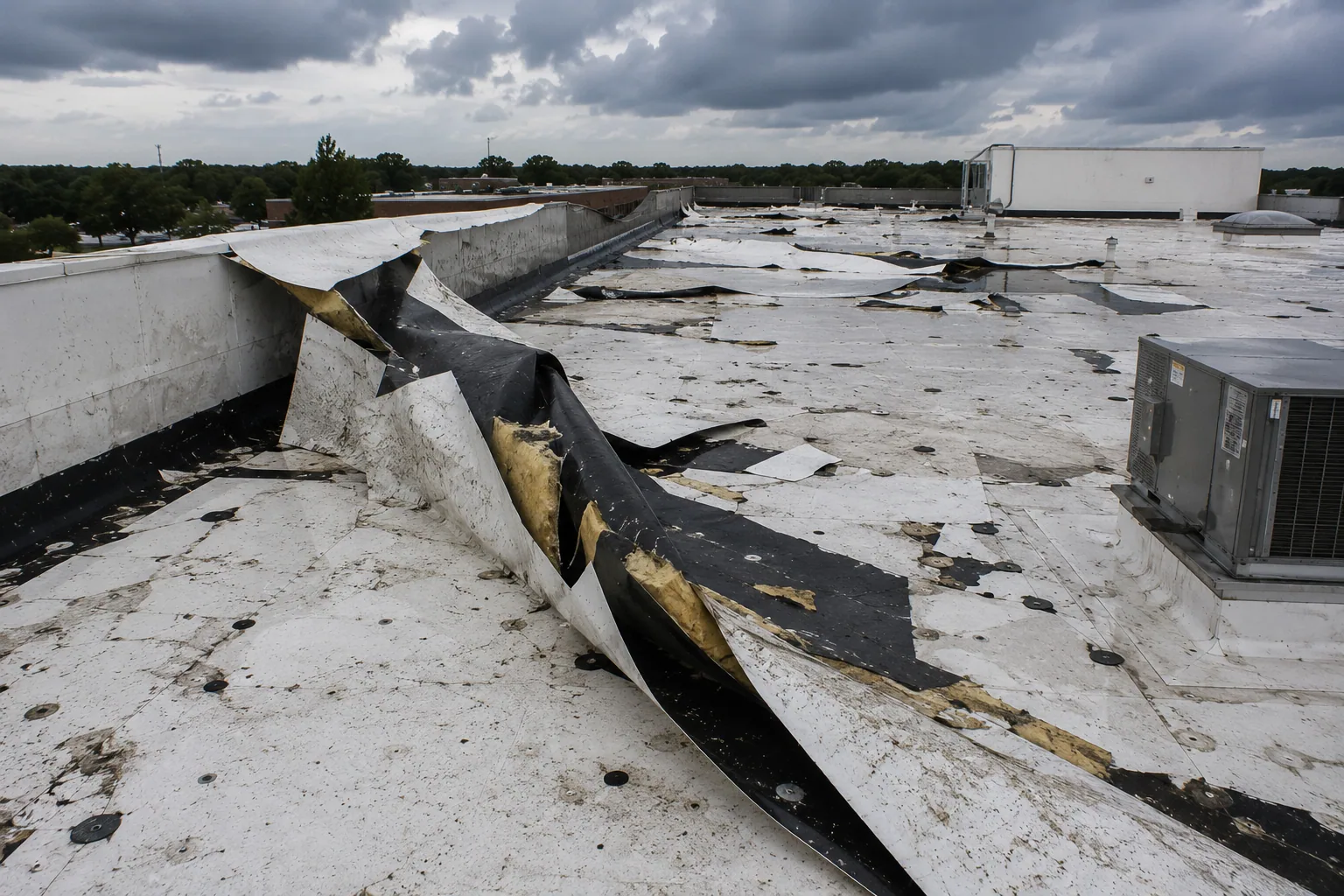
Reopening a damaged roof area before its loose components are secured can expose the building to another round of water entry. A storm repair decision starts with the condition that needs protection and the material safe to approach. Commercial Roofing Centennial assesses commercial storm damage in Centennial, CO, then separates temporary measures from permanent correction. We identify the affected assembly and explain which work can proceed within the available conditions.
The June 2023 severe storm brought large hail to Highlands Ranch and Lone Tree, with a tornado traveling through that nearby area. For South Metro owners, that history makes a roof assessment worthwhile after reported damage or new intrusion. We examine the actual seams, covering and exposed details at the property. The resulting scope connects repair work to observed damage and the construction needed to reach sound material.
Displaced perimeter metal, unsecured membrane or damaged skylight material can present hazards beyond the first visible leak. We assess safe access and the condition of supporting construction before releasing roof work. A weakened deck or unstable component can require specialist assessment and isolation of the affected area. Occupants should stay clear of falling debris, damaged ceilings and water near electrical equipment while appropriate assistance is arranged.
Temporary roof protection may limit further intrusion before the permanent repair boundary is known. That protection needs suitable securement and a water path that does not create another exposed area. We identify what the initial measure addresses and which components still require investigation. The emergency phase can then protect operations while the owner evaluates permanent work, without confusing a temporary covering with completion of the storm repair.
Hail can mark metal, damage exposed equipment components or affect the roof covering in different ways. The examination must consider the material and its condition rather than equate every mark with the same construction requirement. We look for openings, damaged reinforcement and defects at vulnerable transitions, then use appropriate closer checks where the surface does not establish the affected extent. Older wear and previous repairs also deserve separate identification. Exposed foam beneath a damaged protective coating needs suitable correction before weathering extends into the supporting material. That treatment differs from repairing an opening in a reinforced membrane.
For hail-related membrane repairs, a compatible connection requires sound material surrounding the damaged area. Concentrated impacts near a brittle detail may need a wider repair than scattered marks on sound surrounding covering. We explain the proposed boundary and any additional material examination needed. The owner can then distinguish visible effects from conditions requiring immediate construction, while making room for the work necessary to restore the affected detail.
A membrane pulled loose from its support can leave fastening, insulation and perimeter securement affected beneath the visible opening. We examine those layers before pricing reattachment or replacement of the damaged section. Loose material may need removal so the receiving construction can be assessed and made suitable. The permanent work should restore the assembly's intended connection rather than merely return displaced covering to its former position.
Wind-damage correction may involve perimeter components and adjoining flashing as well as the field membrane. Tornado-related damage can also affect structures and equipment that need evaluation beyond ordinary roofing repair. We coordinate the roofing boundary with those findings where applicable. A repair needs appropriate supporting conditions before installation can proceed, so unresolved structural damage remains a practical scheduling dependency rather than an item concealed beneath new surface material.
Water appearing during snowmelt can expose a drain obstruction, damaged flashing or an opening that was concealed by winter conditions. The assessment considers surface access and the route meltwater takes through the affected area. Snow accumulation should not be removed indiscriminately where equipment, membrane or supporting conditions require special precautions. Safe examination and appropriate handling take priority over exposing the entire surface immediately.
At commercial properties in Lone Tree, healthcare, office and retail activity can make the affected interior use important to the repair window. A leak above an occupied treatment room may require a different protection arrangement from one above a service area. We discuss the actual space and available roof access before scheduling permanent work. Installation still needs suitable dryness, preparation and materials, even after the immediate weather event has ended.
A proposed patch or replaced roof section needs complete connections at its edges and around penetrations within the work boundary. We examine drains, wall flashing and equipment curbs that the repair will reach. Those details can change the amount of removal needed to connect with sound material. A neat surface rectangle is not necessarily a suitable construction limit when the damaged assembly extends beneath adjoining components.
For a damaged EPDM covering, compatible seam and flashing materials must connect with a suitable prepared surface. Other systems require their own joining methods and material restrictions. We identify the existing covering and any damaged insulation before recommending the repair approach. Where conditions support localized work, a planned repair scope can establish that boundary. Broader deterioration or storm displacement may call for replacing the affected roof section instead.
Interior drying, equipment checks and restoration of finishes can continue on a different schedule from permanent roof construction. We explain which roofing tasks need access or temporary operating changes so those activities can be coordinated. Photographs distinguish the observed damage, protective work and completed repair. The condition record should also identify adjoining concerns requiring another trade or additional examination.
Centennial requires a mid-roof inspection for applicable roofing work, which needs to fit the permanent construction sequence. We account for that hold where the selected repair scope involves work subject to review before concealment. The owner can then plan reopening and subsequent interior recovery around an actual installation path. A clear roof condition record supports those decisions by identifying what has been corrected and what remains to be addressed.
Different components respond differently to impact, so the covering needs its own examination. We assess openings, material condition and relevant detail damage before recommending removal. Visible metal marks can direct investigation without defining the membrane repair quantity by themselves.
Attachment, insulation support and the condition of the deck may all require examination where displacement has affected them. The proposed repair must reach construction suitable for its fastening or bonding method. Returning loose material to position alone may leave damaged support unresolved.
Structural damage, equipment movement or failed wall components can create dependencies that roofing alone cannot correct. We identify those conditions and the affected boundary. Appropriate specialist work needs coordination before the new covering is connected to unsuitable surrounding construction.
Permanent water-entry correction and suitable drying conditions matter before final finish restoration is released. Immediate interior hazards still need prompt safe handling. Building personnel should coordinate those activities alongside the permanent roof work rather than assume temporary dry-in completes recovery.
Daily work limits and temporary closures should protect the exposed area if installation stops. We assess the amount that can be opened and made suitably dry before releasing removal. That planning keeps the selected repair phase connected to practical protection capacity.
Commercial roofing in Centennial
Commercial roofing in Centennial
Commercial roofing in Centennial
Commercial roofing in Centennial
Commercial roofing in Centennial
Commercial roofing in Centennial
Commercial roofing in Centennial