Compare roofing across Centennial retail and restaurant locations. We assess equipment interfaces, roof condition and operating access before phasing work.
Approving the same roof treatment at every store can leave important differences unresolved at kitchens, shared walls and leased equipment interfaces. A useful program begins with the construction at each selected location. Commercial Roofing Centennial assesses commercial roofs for multi-location retail and restaurant brands in Centennial, CO. We connect repair or replacement decisions with the actual assembly and the operating release needed to complete its work.
The Streets at SouthGlenn combines shopping and dining with residential and working uses. Sheridan's River Point also brings several commercial activities into a retail and dining setting. A chain location within the wider area still needs its own roof examination. We identify receiving condition, equipment connections and access before comparing expenses, allowing the operator to distinguish useful standard requirements from the physical tasks unique to each building.
A chain can occupy standalone buildings and units within larger properties. Shared coverings, walls or equipment areas may change the boundary available for roof work. We identify that physical arrangement before proposing a local correction or replacement. The responsible property parties coordinate the permissions and releases relevant to the selected area.
Coordination with property management teams helps connect those arrangements with the roof task. At a shared shopping property, the useful scope may reach an interface outside the occupied unit's apparent roof outline. We explain that connection before removal or surface treatment. The operator receives an identifiable construction boundary, with related adjoining work and responsibilities connected to the conditions that affect weather protection.
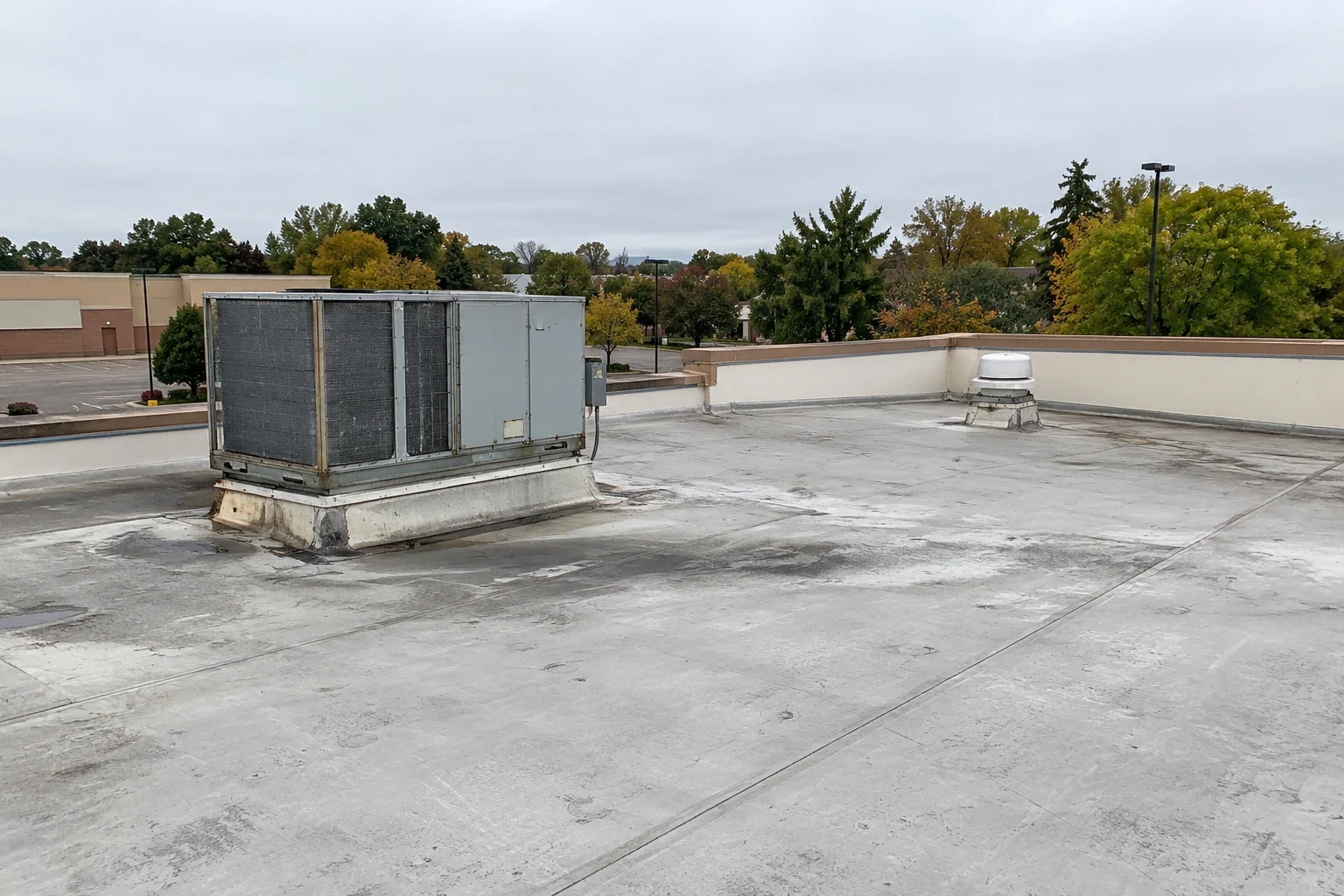
Exhaust units and other kitchen services can create local exposure and access requirements above a restaurant. We examine the actual curb, adjacent covering and contact conditions before selecting material work. Equipment operation and servicing belong with the appropriate responsible parties. Their release should support the preparation required at the roof connection.
Restaurant roof assessment identifies contaminated surfaces or unsuitable old treatments around equipment. Cleaning alone may not establish a sound receiving layer. The detail can require removal and reconstruction before a compatible connection is installed. At an exhaust location, deposited material can also obscure a seam that needs examination before work is selected. We identify the receiving condition after appropriate preparation. If a service arrangement repeatedly brings contamination against the connection, its management belongs beside the roof correction. The finished detail needs a usable surface and a practical route for later equipment care. We explain those material findings alongside any service task needed to prevent repeated contact or interference. The new weather boundary should fit the equipment interface and the actual conditions surrounding it.
Open hours and delivery arrangements can leave different work windows across a chain's properties. We assess the material route, waste position and roof opening at each selected location. A shared entrance or service lane can require coordination with adjoining tenants. Available exterior space should support the entire intended task, including preparation and recurring material movement.
Roof construction around active stores connects those operating arrangements with appropriate closure. Equipment service may need another window before a curb can be prepared. The owner should know which activity depends on which release. We define useful phases around the assembly condition, keeping removal within a boundary that can be appropriately completed or protected while the location maintains its arranged operation.
Water observed above a counter or storage area may have traveled from an exterior defect elsewhere. We examine relevant field seams, walls, penetrations and drainage before defining a repair. The location of the indoor observation helps direct investigation. Receiving layers and the identified entry mechanism establish the material correction required at the roof.
Leak investigation across chain locations can distinguish local damage from a wider assembly condition. Wet insulation, loose support or incompatible treatments may require an opening larger than the visible defect. We describe that boundary and the construction suitable to remain. The operator can compare a useful local expense with the wider condition it leaves untreated, using physical findings before authorizing another treatment.
Material selection across locations should preserve the receiving requirements at each roof. A deck or retained insulation layer suitable for one assembly may differ from the next property. We examine attachment, detail geometry and surface condition before applying a preferred specification. Product information needs to match the actual installation and service exposure.
A PVC assembly comparison includes compatible joining and the components needed at walls, curbs and edges. Contamination at a seam can require preparation before a suitable welded connection is possible. Other coverings use their own appropriate joining procedures. We describe those tasks in the site scope, giving the chain complete construction to compare rather than assuming a shared product name establishes identical work everywhere.
Castle Pines lists restaurants, grocery businesses and professional services in its business directory. A selected roof project there may share exterior movement with several occupied uses. We examine the actual property access before planning installation deliveries. Ground space and lifting positions need coordination with the available operating arrangement at that location.
For retail and dining properties in the SouthGlenn Sub-Area, related construction teams may coordinate wall or equipment changes affecting roof details. Their receiving work should be ready before the roof connection needs it. We identify those dependencies alongside recurring material handling. The chain receives a location-specific sequence that connects useful roof correction with the actual interfaces and access supporting its construction.
Completion should leave each location with identifiable renewed construction and practical access to its service points. We examine the field and adjoining details before releasing the phase. The chain should know where material remains from an older assembly and which connections have been changed. Care requirements follow the actual products and details supplied.
Later equipment visits need procedures that preserve compatible surfaces and leave drainage routes usable. We explain those requirements to the responsible parties. Packaging, sharp components and unrelated treatments should not remain against the covering after service. A subsequent roof assessment can compare observed condition at individual locations. The operator plans its next correction or capital phase through useful site-specific work, with the required operating release tied to the actual construction need.
Equipment exposure and receiving construction can differ between locations. Their material preparation needs assessment before a common product is selected. We define site-specific work that supports the proposed covering or correction.
Roof interfaces and access may extend beyond the occupied unit. Property responsibilities need coordination around the actual work boundary. We identify those construction relationships before planning removal or replacement.
Contaminated material or an unsuitable old treatment may remain beneath the visible surface. A compatible connection requires sound receiving construction. We examine the local assembly before selecting preparation and related equipment tasks.
Available windows need connection with specific preparation, handling and closure tasks. Equipment interfaces can require separate releases. We identify those dependencies before arranging a useful phase at each location.
The renewed boundary, installed material and access obligations should remain clear at the individual property. Later equipment work needs compatible procedures. We explain care requirements so servicing preserves the assembly actually supplied.
Commercial roofing in Centennial
Commercial roofing in Centennial
Commercial roofing in Centennial
Commercial roofing in Centennial
Commercial roofing in Centennial
Commercial roofing in Centennial
Commercial roofing in Centennial
Commercial roofing in Centennial