Plan restaurant roofing in Centennial. We examine cooking exhaust, equipment releases and occupied access before defining roof repairs or replacement work.
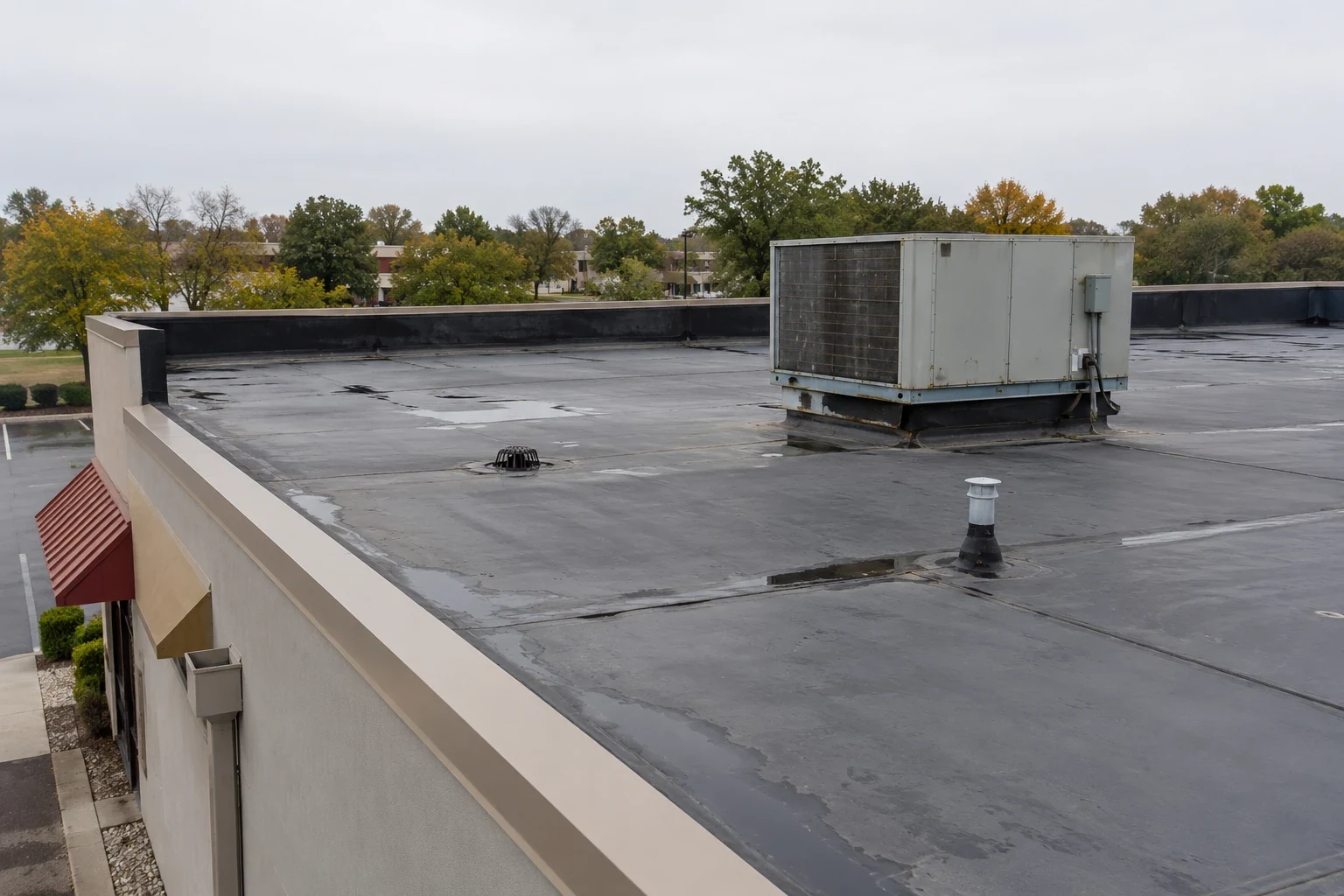
Opening the roof beside a kitchen exhaust curb may require a service window outside ordinary preparation and dining hours. The construction price needs to include that access and the material suitable for its actual exposure. Commercial Roofing Centennial assesses restaurant roofing in Centennial, CO, through the equipment interfaces and surrounding assembly. We define the necessary correction before coordinating the operating release needed to complete it.
Dining is part of the mixed activity at the Streets at SouthGlenn, within the SouthGlenn Sub-Area. A restaurant property in that setting can share delivery and customer routes with other occupied businesses. We examine its actual equipment layout and roof access before selecting staging. The proposal identifies roof repairs or replacement boundaries together with the service and site arrangements they require, instead of assuming every restaurant can make the same working area available.
Deposits near exhaust equipment can create particular receiving-surface and maintenance conditions. We identify actual contact areas and review the selected product's suitability for that exposure. The roof covering category alone should not settle the specification. Equipment discharge and cleaning arrangements may also need attention through the responsible service parties.
PVC membrane restaurant options can be considered through the relevant product information and complete assembly requirements. We examine the supporting layers and adjoining details as part of that comparison. A suitable product does not eliminate the need to manage deposits or protect its service area. The owner understands which material is proposed and which operating or maintenance tasks remain necessary after installation.
Exhaust and cooling equipment can restrict the preparation needed around their curbs. Moving, disconnecting or servicing those components belongs with the appropriate equipment parties. We identify the roofing access required and coordinate its sequence with that work. The operating window must support the construction necessary at the detail, not merely the arrival of personnel.
Equipment curb and support adjustments can become necessary when roof replacement changes the finished elevation. We assess the available flashing height before fixing the assembly thickness. A low or damaged curb may need correction beyond a membrane patch. Its upper construction and equipment connection also require suitable condition so water does not enter above renewed lower flashing. We examine those components separately from the field covering. Where another part of the equipment housing needs attention, that task should be coordinated before the roof connection is treated as complete. The owner receives a scope that includes those related tasks and a practical arrangement for equipment return after the new weather connection is complete.
Old sealants, patches and equipment residue can prevent a suitable connection at a visible defect. We examine the receiving material before selecting repair components. Cleaning or removal may extend beyond the smallest open area. The proposed detail needs compatible, stable construction that can accept the intended joining method.
Penetration and flashing corrections also assess the supporting layers beneath the weather connection. Moisture or deterioration can require a larger opening. We explain that boundary before preparation begins and coordinate any equipment release it needs. The useful repair addresses the material and geometry responsible for the failed connection rather than placing another surface treatment over an unresolved old patch.
Roof activity above food preparation or occupied dining space can require different protection and availability arrangements. The operator establishes requirements relevant to those uses. We identify the roof opening and the interior space associated with it before removal. The construction sequence should connect protection and room release with the actual work phase.
Reroofing around restaurant operation can separate tasks where the assembly permits suitable phasing. At a connection to a grocery-related roof area, refrigeration lines or other service routes may cross the proposed removal boundary. We examine their support and working clearance before selecting that edge. A useful phase needs access for its weather detail and coordinated handling of any service component that prevents appropriate preparation beneath or around it.
Curbs and service lines can divide a restaurant roof into small drainage areas. We examine actual elevations and outlet connections before defining the work. A broad slope does not necessarily prevent a low pocket behind exhaust equipment. The construction response should identify the geometry or obstruction creating that condition.
Drain and scupper coordination includes suitable connections to the finished roof surface. Added layers can change those elevations and the available height at curbs. We assess those interfaces alongside the covering choice. The owner can compare a complete replacement or repair scope with its necessary drainage work included, rather than assume a new membrane will correct every existing water path without related construction.
Elizabeth's downtown supports shopping and dining, including seasonal outdoor activity. Restaurant roof work within an occupied commercial setting can need coordination of nearby exterior areas and normal arrivals. We assess the actual property routes before selecting material handling or waste positions. Required access should remain part of that arrangement even when construction is scheduled outside a dining period.
For SouthGlenn restaurant properties, a shared shopping center roof can require work across a dividing wall or change in roof height. We examine that transition and the upper runoff before establishing the repair edge. Deliveries need an agreed position that leaves tenant entrances and the required waste route usable. Those arrangements support the actual connection work, with adjoining access available before the roof phase reaches its closure detail.
Later exhaust cleaning and equipment work can introduce residue, sharp components or repeated traffic to the roof. Suitable protection and compatible procedures remain necessary after construction. We identify practical service routes and explain the care relevant to the installed assembly. Renewed flashing and outlets should remain reachable for examination.
The completed work is checked at its field connections and adjoining details before release. The owner receives its construction boundary and any related tasks still requiring coordination. Future repairs should use material suited to the installed covering and actual receiving condition. Routine examinations can then focus on exhaust areas, drainage and service connections, giving the operator a practical way to address developing defects without repeatedly treating the same unmanaged equipment exposure as an isolated roof symptom.
Actual deposits and contact conditions influence product suitability and surface preparation. Equipment management may create separate maintenance needs. We review those conditions rather than infer a complete roof specification from the restaurant use alone.
The required preparation and connection geometry establish whether suitable access exists. Some work needs release or adjustment from the responsible service party. We identify that dependency before treating the detail as an immediately available roof repair.
Its stability, compatibility or accumulated contamination may prevent the intended new connection. The receiving surface needs examination. We identify preparation that reaches suitable material instead of assuming another treatment can bond appropriately over the previous repair.
The operator establishes the requirements relevant to the affected interior use. We identify the roof phase and access it needs. The sequence connects that construction boundary with the appropriate release and protection before removal begins.
Renewed flashing, compatible surface condition and clear drainage still need protection. Sharp components or deposits should not create avoidable damage. We explain the relevant service routes and care considerations at completion of the roof work.
Commercial roofing in Centennial
Commercial roofing in Centennial
Commercial roofing in Centennial
Commercial roofing in Centennial
Commercial roofing in Centennial
Commercial roofing in Centennial
Commercial roofing in Centennial
Commercial roofing in Centennial