Plan grocery store roofing in Centennial. We assess refrigeration interfaces, food-area protection and receiving access before defining roof construction.
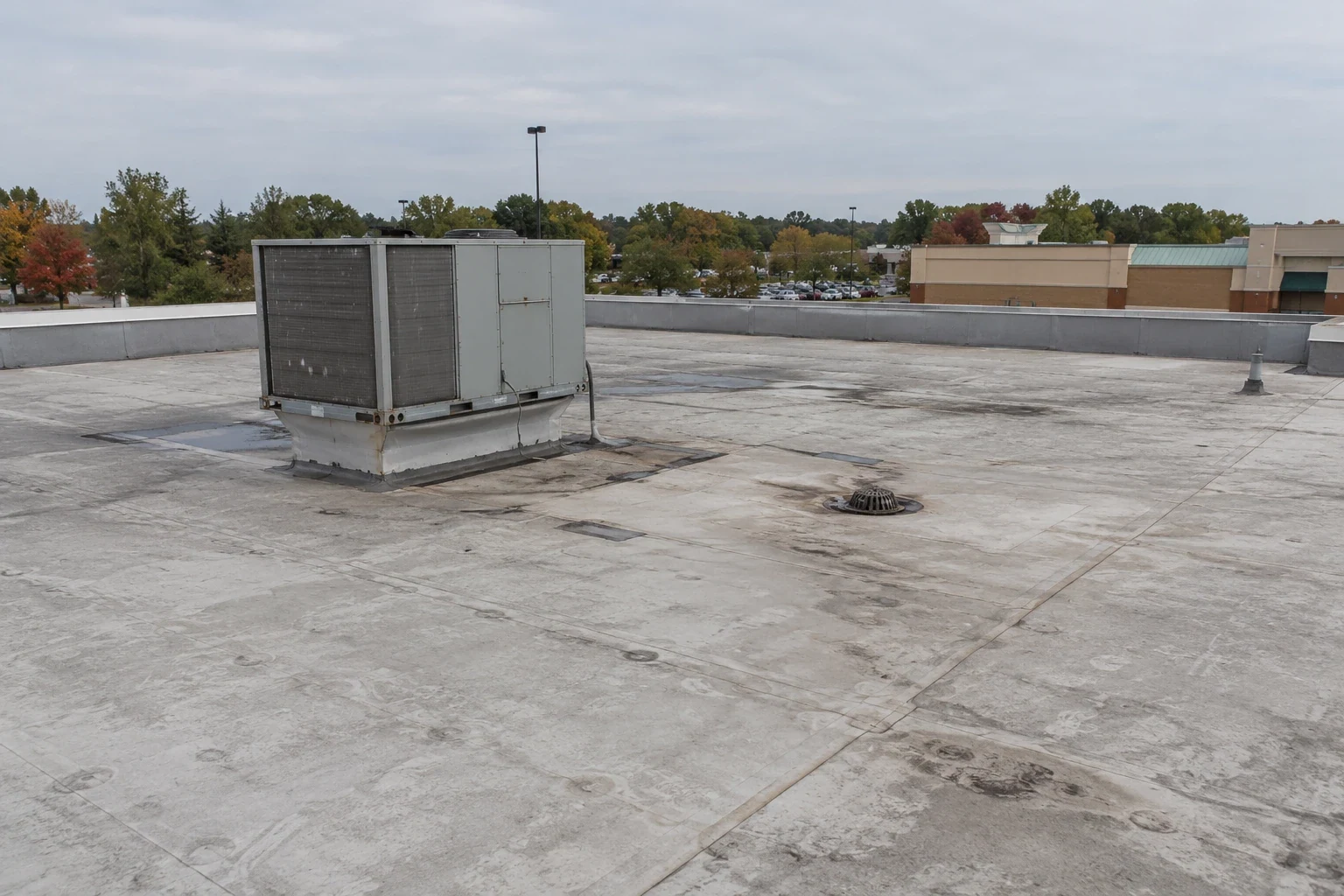
Roof work near a refrigeration connection can depend on a service arrangement that must be settled before the opening becomes available. The surrounding store may remain occupied while that particular detail awaits its planned release. Commercial Roofing Centennial assesses grocery store roofing in Centennial, CO, through the actual equipment and assembly interfaces. We define the roof correction alongside the operating tasks required to reach it.
Castle Pines has grocery businesses within a commercial mix that also includes restaurants, banking and professional services. A store in that broader south-metro setting can share site circulation with several occupied uses. We examine its actual receiving route, customer access and roof construction before planning work. The owner receives a repair or replacement scope that identifies necessary protection and service coordination rather than assuming every part of the store can follow one construction schedule.
Lines, equipment supports and penetrations can restrict the space required for roofing preparation. Their movement or release belongs with the appropriate equipment parties. We identify the connection needing access and coordinate the construction that follows. A line that appears easy to lift should not be treated as an available roofing adjustment without that service coordination.
Equipment curb and support planning includes the relevant roof interface and questions about its supporting construction. We establish where new flashing or receiving material is necessary. The completed detail should remain practical to examine after equipment returns. The owner understands which trade tasks precede the correction and which weather connection the roofing work restores, allowing the service window to support a defined construction activity.
Roof removal above stocked shelves, food handling space or an occupied service area can require different protection arrangements. The responsible store parties establish requirements relevant to their operation. We identify the roof opening and its associated interior boundary before removal. The construction sequence should connect those protection tasks with the area actually exposed.
Reroofing while grocery operations continue can distinguish released space from adjoining areas that remain available. At an attached refrigerated storage roof area, the proposed opening needs assessment of insulation continuity and the relevant air and vapor-control construction. We identify the receiving layers and closure detail before removal. The operator coordinates protection and room availability around that assembly work, including any interface that must remain accessible until the renewed boundary is examined.
Waste containers, material delivery and lifting operations can conflict with stock receiving or customer arrivals. We assess the actual routes with the operator before selecting positions. Stock deliveries and construction positions must leave the emergency approach usable while customer entrances remain available. Suitable staging should support repeated construction handling without occupying a route that the store depends on during normal operation.
Changes to a receiving window or exterior route need a clear construction purpose. At an adjoining shopping center roof project, the same service lane may carry both grocery deliveries and roof waste. We identify the position and recurring movement required for construction, then coordinate a usable arrangement with the responsible property parties. A temporary delivery gap is insufficient if waste handling needs continuous access. The selected phase should have a dependable route for its actual material quantity and closure requirements.
Water can travel through roof construction before reaching shelves or an occupied room below. We investigate relevant exterior connections and compare them with the reported observation. Equipment details, seams and adjoining walls can require different correction methods. The repair boundary should follow the construction responsible for the water route.
Grocery roof intrusion investigation also considers moisture in concealed layers where further examination is warranted. Wet insulation or deteriorated support may need removal before the covering is repaired. We explain the affected boundary and coordinate its interior protection. The owner receives a scope that restores suitable material instead of a surface patch selected solely because it is closest to the visible indoor symptom.
Dense equipment and service lines can complicate drainage and outlet access. We examine the roof's actual water paths before selecting repair or replacement. The drainage plan should consider local high points and the receiving elevation at each outlet. Those relationships help identify whether field slope or a detail beside equipment needs correction within the proposed work. Pockets behind curbs or obstructions near outlets may need separate construction. A new covering does not independently change the geometry that traps water beside existing equipment.
Outlet and drainage detail work includes the relationship between the connection and the finished roof surface. Added insulation can alter its elevation as well as equipment flashing height. A proposed PVC grocery roof assembly needs those compatible interfaces within the scope. We assess them before fixing field quantities so the owner compares a complete installation rather than a membrane price that leaves outlet adjustments unresolved.
The SouthGlenn Sub-Area contains commercial centers within surrounding neighborhoods. A grocery roof project in that kind of occupied setting needs site planning based on its own deliveries, customer use and equipment. We identify the actual areas that can be released before defining the construction sequence. Neighboring commercial activity does not establish the store's usable work period.
For commercial properties in Castle Pines, the roof assembly and closure capacity also influence daily removal. Weather, detail complexity and concealed findings can change the useful boundary. We coordinate those changes with the operator before expanding an opening. The agreed sequence explains which store areas need protection and where construction can continue while adjacent space remains in ordinary use.
Refrigeration and other equipment servicing continues after roof construction is completed. Suitable walkways or contact protection may be needed where visits are frequent. We identify those access routes during planning and explain their use at handover. Sharp components and debris should not be left where they can damage the roof surface.
Completed work needs examination of field connections, flashing and outlets before its boundary is released. The owner receives a clear account of renewed construction and related tasks still requiring coordination. Future condition checks should reach the same service areas without concealing details behind later equipment changes. We explain relevant compatibility considerations so subsequent repairs follow the installed assembly and its observed condition rather than another uncoordinated surface treatment.
The responsible service parties coordinate the equipment and line requirements. We identify the roof access needed and sequence the correction after the appropriate release. An apparently small adjustment should not be assumed available without that coordination.
The store's responsible parties establish relevant operating requirements. We connect those needs with the specific roof opening and construction phase. The plan identifies affected space before removal rather than assigning one protection arrangement to every interior use.
Material handling and waste movement can conflict with routine stock deliveries. Their positions and timing need an actual site arrangement. We coordinate the required release before roof materials occupy a route the operator needs during normal use.
A higher finished surface can reduce available flashing height and affect adjoining details. Necessary adjustments may require service coordination. We assess those clearances before fixing the replacement assembly's thickness and installation sequence.
Renewed connections, clear outlets and practical maintenance routes still need protection. Compatible procedures should be used when equipment changes affect flashing. We explain those responsibilities at completion so ordinary service does not create avoidable roof damage.
Commercial roofing in Centennial
Commercial roofing in Centennial
Commercial roofing in Centennial
Commercial roofing in Centennial
Commercial roofing in Centennial
Commercial roofing in Centennial
Commercial roofing in Centennial
Commercial roofing in Centennial