
Plan school roofing in Centennial. We assess classroom use, roof condition and access needs before defining practical repair or replacement construction phases.
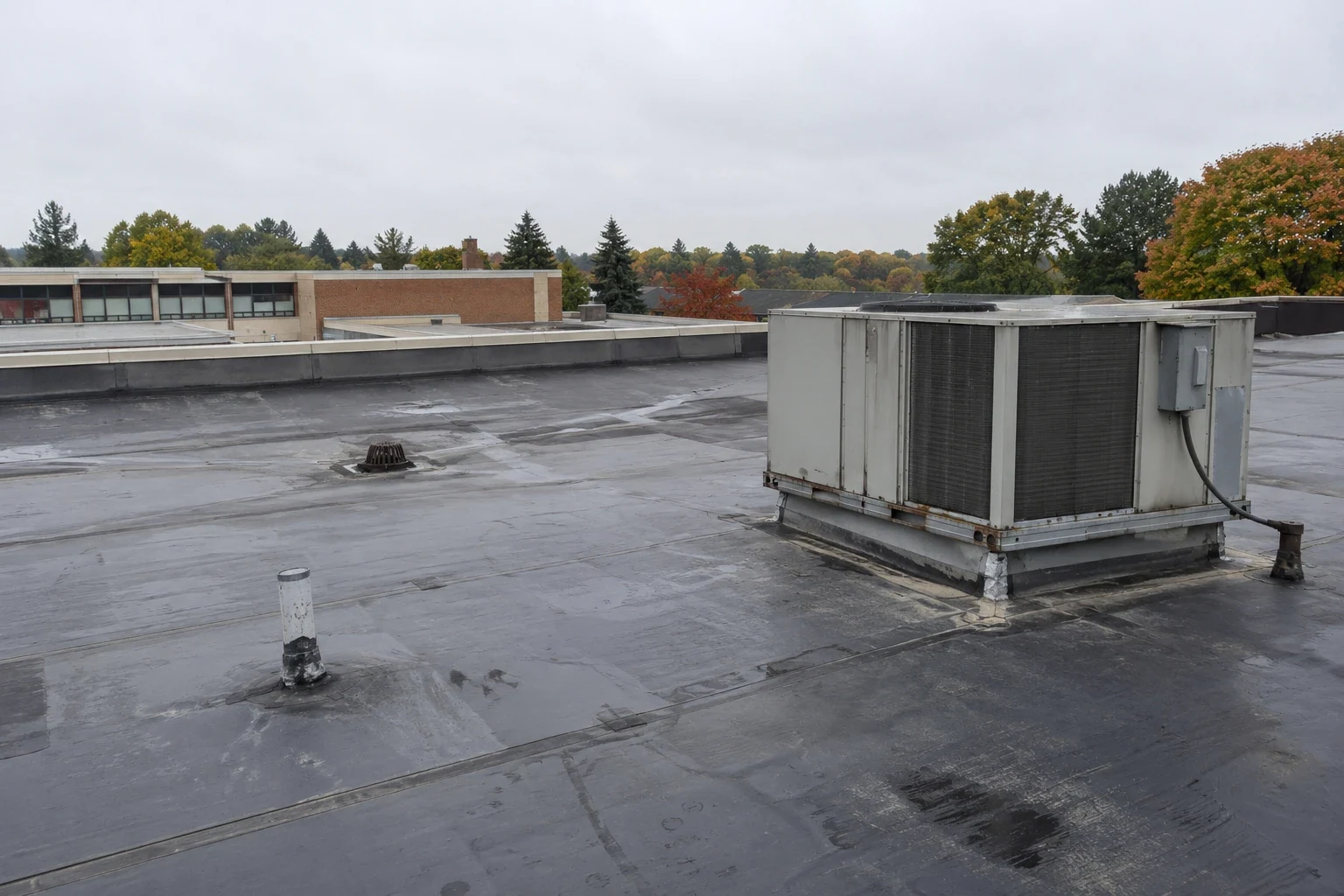
A school break provides a possible roof-work window, but it does not establish that every building area is available throughout that period. Programs, staff activity and building maintenance can continue while classes are paused. Commercial Roofing Centennial assesses school roofing in Centennial, CO, by connecting the actual roof scope with the spaces and access the school can release. We define those dependencies before committing construction to a calendar interval.
Littleton borders Centennial, Englewood and Highlands Ranch within the wider south-metro area. Schools across that regional setting still have individual building arrangements and occupied schedules. We assess the actual roof sections, entrances and equipment rather than assume a uniform campus layout. The owner receives a construction comparison that identifies necessary repairs or replacement phases and the operating coordination required at the specific school property.
Removal, concealed-layer correction and installation need enough time for suitable daily closure and completion. A short calendar opening may support localized work but not every proposed replacement boundary. We examine the assembly and detail complexity before defining the phase. The schedule should leave room for required examination and realistic material handling.
Reroofing around continuing school use can distinguish areas released for construction from rooms supporting ongoing programs. We coordinate those boundaries with the owner. Weather or concealed findings may change a planned work stage, so the arrangement needs a practical response process. The school receives a defined roof sequence rather than a promise based solely on the number of days shown as a break.
Materials, waste removal and lifting operations can conflict with entrances, playground access or other occupied routes. We assess the actual circulation and identify where staging can occur. Required emergency access also remains part of that arrangement. A route used infrequently during classes may become important during a program operating within the planned work period.
The owner identifies the spaces and movements that must remain available. Material lifting needs an agreed position apart from the route used for arrival and departure. At a connected educational campus roof project, we examine the passage or wall transition joining the buildings before selecting removal boundaries. That connection may need work from both roof levels. The access plan should provide the required material route and receiving-detail release before the phase opens above the occupied passage.
Additions and earlier replacement projects can leave distinct roof assemblies across a school. We identify those construction boundaries during examination. A classroom wing with isolated detail damage may need a different scope from an adjoining area containing widespread moisture. The visible footprint should not determine one replacement decision for all sections without assessment.
Examination of school roof condition considers coverings, outlets and transitions associated with each area. Relevant openings help establish concealed construction where the proposed work requires it. We explain which material remains suitable and which layers need removal. The owner can then allocate the roof allowance to actual construction needs, with a clear description of the work deferred or retained in other sections.
Water inside a classroom may have traveled through concealed layers before reaching the observed location. We compare that observation with relevant roof and adjoining building details. A seam, curb or wall connection may require a different correction from the nearest visible roof mark. The investigation establishes the construction responsible for the entry route.
School roof leak investigation also examines whether moisture has affected insulation or supporting material. Those findings can enlarge the removal boundary beyond the covering. We coordinate the required interior protection with the owner before opening the affected assembly. The useful repair restores suitable construction and identifies related building work, rather than treating a ceiling observation as proof that one small surface patch addresses the complete problem.
Roof details around ventilation or other equipment may require release from the responsible service parties. We identify which connection needs access and coordinate the associated work. That interruption can differ from the availability of the surrounding field roof. A building area may remain occupied while a particular equipment detail awaits its planned correction.
A proposed TPO school roof assembly or another suitable covering needs compatible support and adjoining components. Added insulation may reduce available flashing height at an existing curb. We assess those interfaces before fixing the assembly thickness. Outlet elevations also need coordination with the proposed field surface. Where tapered insulation is included, its layout should direct water around obstructions and into suitable connections. Those details belong in the roof scope before the new covering is installed. The owner receives a covering proposal that includes necessary detail adjustments instead of discovering them after field installation has changed the equipment connection's clearance.
Centennial identifies education and health services within its employment mix. School roof work in that broader community still needs a budget comparison grounded in the actual building condition. We distinguish useful localized correction from a larger reconstruction requirement. The proposal identifies what the expense renews and what material remains in place after the work.
For school properties in the Littleton area, a phased plan may fit the operating schedule where the assembly permits it. At a connected public building roof section, the selected edge can cross a wall termination or shared outlet route. We assess that physical connection before separating construction quantities. The school phase needs a complete weather boundary even if adjoining work follows later, including suitable temporary closure or a permanent detail compatible with the retained assembly.
Completed roof areas need examination of their field connections, outlets and flashing before release. We identify the finished boundary and any related tasks still requiring coordination. Later equipment servicing should preserve those details and protect the covering from debris or sharp components. Suitable access routes remain important even when routine visits occur outside occupied hours.
Maintenance planning for the school roof can direct later checks toward drainage and known service areas. The owner can coordinate those visits with the building's actual availability. We explain relevant material compatibility and protection considerations at completion. Future roof decisions can then follow observed condition and a defined work boundary rather than another emergency interruption to correct an overlooked access or detail problem.
Programs, maintenance and building activity can continue during breaks. The proposed roof construction also needs suitable weather and closure capacity. We assess actual availability and scope before defining the work sequence for that calendar period.
The actual entrances and movements need coordination with staging, lifting and waste handling. Required access should remain part of that arrangement. We identify practical site boundaries before deliveries are positioned around occupied school areas.
Additions or earlier projects can leave distinct assemblies and concealed conditions. Their useful repair or removal needs may differ. We identify those boundaries before assigning one broad replacement decision across the building footprint.
Water may affect insulation or support beneath the visible covering. Relevant examination establishes the necessary opening. We explain those findings and coordinate interior protection before selecting a repair limited to the surface connection.
Reachable outlets, protected service routes and compatible later repair procedures support useful roof care. Visits can be coordinated with the school's actual schedule. We identify those arrangements at handover and distinguish completed construction from any remaining related tasks.
Commercial roofing in Centennial
Commercial roofing in Centennial
Commercial roofing in Centennial
Commercial roofing in Centennial
Commercial roofing in Centennial
Commercial roofing in Centennial
Commercial roofing in Centennial
Commercial roofing in Centennial