Assess standing seam metal roofing in Centennial. We examine panel movement, concealed attachments and transitions before defining the construction scope.
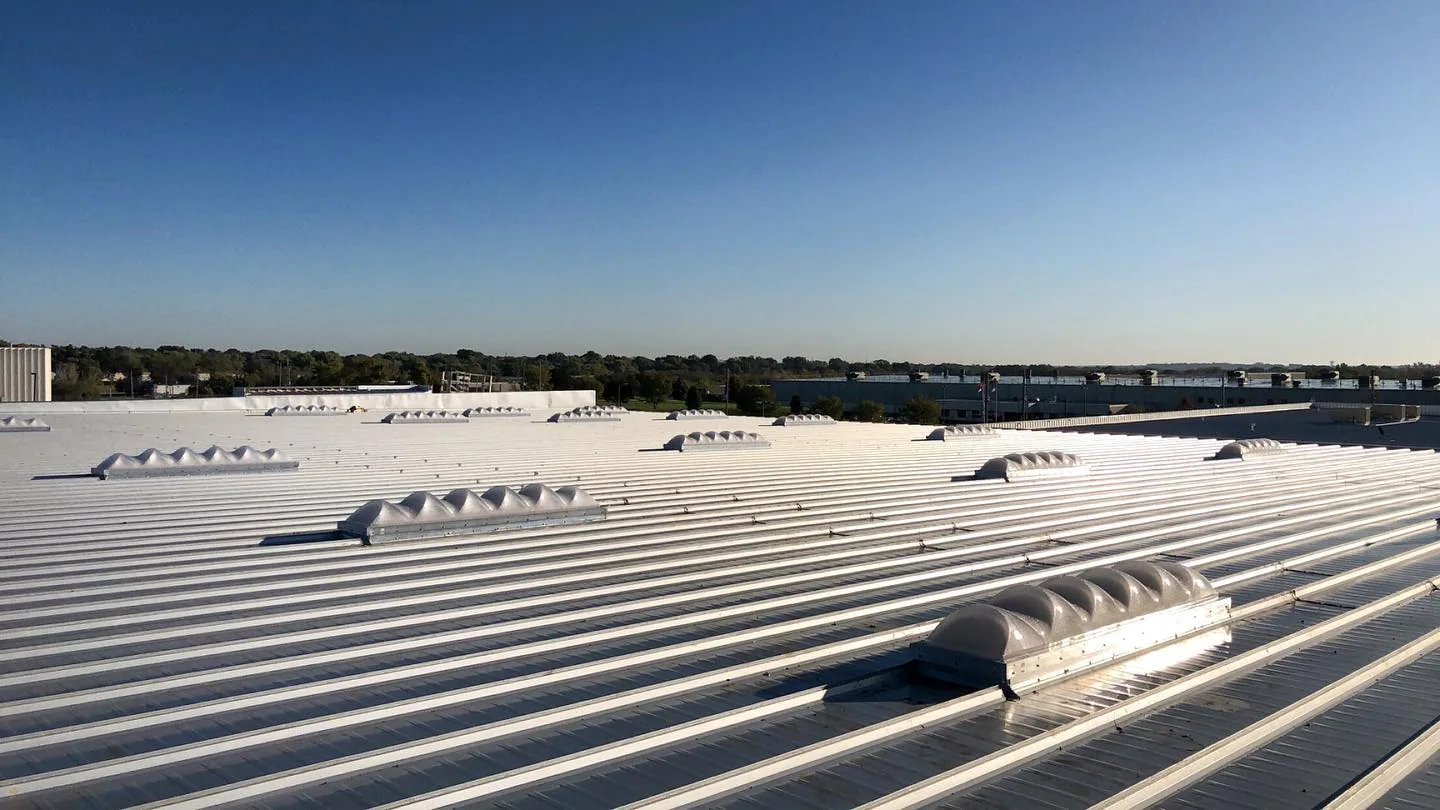
A long metal panel needs room for its intended movement without losing the weather connection at its ends or penetrations. Repair planning should examine that relationship before adding restraints or sealing every visible joint. Commercial Roofing Centennial assesses standing seam metal roofing in Centennial, CO, through panel condition, attachment and detail geometry. We identify the construction responsible for the defect before defining the repair or replacement boundary.
Dove Valley Business Park contains industrial, flex and office activity in unincorporated Arapahoe County. A commercial building in that broader area can have equipment and access requirements that influence metal roof construction. We assess its actual panel arrangement and supporting structure. The owner receives a scope that identifies which roof components need correction and how the necessary work fits around ongoing building use.
Temperature changes can cause metal panels to expand and contract. The selected system's attachments and details must accommodate the intended movement while providing appropriate securement. We examine the panel run, clips and adjoining construction before selecting a correction. A field modification that prevents movement can create stress at another connection even when it temporarily closes the visible opening.
Long panel runs and changes in geometry deserve particular examination at their fixed and moving connections. We identify whether the existing detail follows the intended system arrangement and coordinate design questions where needed. The assessment distinguishes a damaged component from a broader construction conflict. The owner understands why replacing a small visible piece may be insufficient if the panel's movement continues to act against an unsuitable termination.
Standing seam systems use panel-edge connections with geometry and closure procedures appropriate to the selected product. Some assemblies require particular seaming equipment and settings. We identify the installed system before planning work at those connections. Surface appearance alone may not establish whether a seam has the intended engagement along its length.
Where a connection has opened or become damaged, the surrounding panel condition affects the repair choice. Dents, distorted edges or previous alterations can prevent a simple correction. We examine those conditions and identify whether panel replacement or a different detail is necessary. A comparison with exposed-fastener metal roof retrofit should explain that the systems have different attachment and connection arrangements, rather than assign the same repair procedure to every metal covering.
Hidden clips and fasteners connect the panels to the supporting construction without being visible across the roof surface. Their condition and engagement matter even where the panel finish looks intact. We examine relevant access points and coordinate further investigation when the proposed work requires it. The repair boundary should reflect the attachment construction, not just the metal visible from above.
Replacing a panel can involve releasing adjoining connections and preserving the system's intended movement. We identify that sequence before treating an isolated damaged panel as a simple sheet change. Supporting material also needs appropriate condition where new attachments engage it. The owner receives a construction explanation that includes those concealed dependencies and the work required to restore the selected system at the affected location.
Pipes, curbs and roof-mounted equipment create interfaces within a panel arrangement that directs water downslope. Their details need to suit the panel geometry and movement. We examine how the connection handles runoff and where its upper weather protection begins. An opening placed without considering those paths can create a repeated leak even when sealant appears intact nearby.
Equipment curb and support coordination identifies the supporting construction and service release needed for detail correction. We assess the transition around the curb and any upstream water diversion within the selected arrangement. Later equipment placement should preserve access to the repaired connections. A support added for convenience should not restrain a moving panel or concentrate load on an unsuitable section of the roof covering.
Water observations beneath a metal roof can involve exterior entry, condensation or another building source. We examine the relevant roof connections alongside the interior conditions before selecting repair. Insulation and other concealed components may need separate investigation. Sealing an exterior joint does not resolve a moisture condition that originates through a different mechanism.
The proposed assembly should address its insulation and moisture-control requirements through appropriate design. A roof inspection of the affected area helps establish visible condition and further questions requiring evaluation. When comparing replacement with a single-ply roof alternative, we explain how the supporting construction and moisture considerations change. The comparison remains tied to the actual building rather than the covering's appearance alone.
Highfield Business Park accommodates distribution, laboratory, assembly, technology and office uses. A property with goods movement or equipment servicing may have limited staging areas available during normal operation. We assess the actual access and material handling needs before planning long-panel delivery or removal. The construction sequence identifies which routes remain usable and where controlled work access is required.
For Dove Valley Business Park properties, the planned roof opening also needs suitable weather closure. Occupied reroofing arrangements connect the panel work with room use and operating release. We identify the construction boundaries and lifting dependencies before fixing the schedule. The owner's price comparison then includes the practical handling and access required to complete the proposed metal roof work.
Maintenance personnel need a suitable access arrangement for the particular panel system. Walking across unsupported or vulnerable areas can distort the covering or affect its finish. We identify practical routes and relevant protection during construction planning. Equipment attachments should also follow an appropriate arrangement rather than rely on an improvised screw through a convenient panel surface.
At completion, examination includes the seams, terminations and renewed penetrations. Drainage components and runoff paths should remain clear. A maintenance plan for the metal roof can direct attention to those details as the building operates. We explain care requirements without assigning a universal lifespan to the material. Later repairs can then be evaluated against the observed condition and the installed panel system's actual construction.
Temperature changes can move the panels relative to adjoining construction. An unsuitable restraint may transfer stress into another connection. We examine the intended attachment and termination arrangement before selecting a repair that could restrict that movement.
The surrounding connections and attachment arrangement affect the removal sequence. Adjoining seams may need release, and concealed supports need examination. We establish those dependencies before pricing the work as a simple visible panel replacement.
Their connections must suit panel geometry, runoff and movement as well as the equipment opening. Supporting construction can create separate requirements. We assess the complete interface rather than relying solely on a seal around the visible penetration.
Condensation or another building source may also contribute. Interior observations and relevant exterior details need examination before the repair is chosen. We identify the condition requiring correction instead of assuming that every moisture observation calls for exterior sealing.
Its load and connection arrangement require an appropriate evaluation for the selected panel system and building. Improvised attachments can affect movement or weather protection. We coordinate the relevant roof interfaces with the parties responsible for the proposed equipment.
Commercial roofing in Centennial
Commercial roofing in Centennial
Commercial roofing in Centennial
Commercial roofing in Centennial
Commercial roofing in Centennial
Commercial roofing in Centennial
Commercial roofing in Centennial