Get commercial roof claim assistance in Centennial with damage photographs, repair scope and coordination that distinguishes temporary work from restoration.
Authorizing temporary roof protection while an insurance review continues requires a clear separation between urgent work and permanent construction. Commercial Roofing Centennial assists commercial owners in Centennial, CO, with roofing observations, photographs and repair-scope coordination for insurance claims. We examine the assembly and describe the work needed to correct observed damage. Coverage and claim decisions remain matters for the insurer and the applicable policy.
Large hail accompanied the June 2023 severe storm in Highlands Ranch and Lone Tree, where a nearby tornado also occurred. Following a reported event, the useful roofing question is what happened to the actual covering, details and supporting materials. We connect each proposed repair to its location and observed condition. The owner can then address immediate exposure while discussing a definite construction scope during claim review.
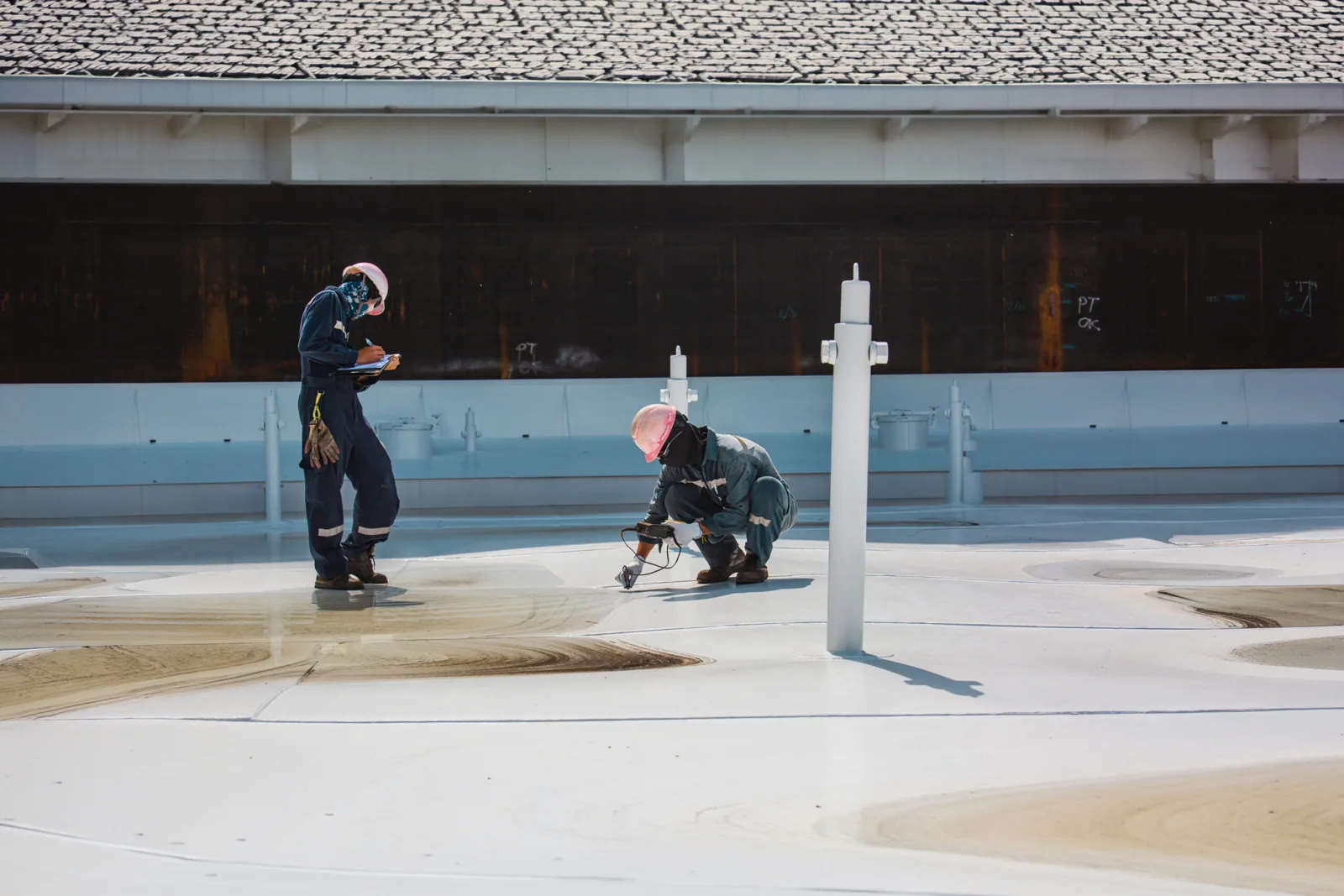
A photograph of a surface mark needs context about its location, material and relationship to the surrounding assembly. We record visible openings, displaced components and damaged details with views that make their positions clear. Close images help describe the condition, while broader images show the relevant roof section and adjoining construction. Both matter when a repair boundary must be explained to someone who was not present during examination.
Damage to perimeter metal may require different correction from damage to a membrane or skylight detail. We assess those components individually and identify where closer checks are necessary. Aerial inspection photographs can help locate dispersed visible damage where flight and roof conditions permit. Physical examination still supports material and connection decisions that images alone cannot settle. The roofing record should distinguish observation from the proposed construction, so the owner's claim discussion has a clear factual starting point.
Prior patches, worn service routes and older deterioration can affect the repair method even when a recent event prompted examination. We identify those conditions where they are apparent and compare available earlier roof records. The purpose is to understand the assembly that will receive the repair, including areas where sound compatible material is limited. A recent opening may need a wider boundary because adjoining construction was already deteriorated.
The record distinguishes confirmed observations from questions requiring additional examination of retained layers or attachment. That helps explain why one defect can be priced immediately while another needs an investigation allowance. We do not assign a cause solely from a reported storm date or the age of a patch. The owner receives a description of the roof condition and the basis for the proposed correction, which can then be considered alongside the insurer's evaluation.
Active intrusion or loose material may require protective work before the final repair extent is established. Emergency dry-in should have its own location, purpose and completed-work record. We describe which opening the measure protects and which damaged components still need assessment. That distinction supports follow-up without treating a temporary tarp or membrane as permanent restoration of the assembly.
Safety hazards inside the building require prompt attention through building personnel and the appropriate specialists. Photographs can preserve the observed condition while necessary protection proceeds. Permanent roof repairs may later require removal of the temporary material to reach damaged insulation or rebuild a connection. We explain that additional work in the proposed scope. The owner can then separate protection, investigation and permanent correction when coordinating expenses and the building's recovery sequence.
Replacing a damaged membrane section involves its seams, penetrations and edge connections as well as the visible field area. We assess how the new material will join sound retained construction and which details fall within the work. A wet insulation area may extend beyond the apparent surface opening. Selected examination helps establish that removal extent before the proposed quantity is treated as a complete repair allowance.
A suitable moisture survey with confirmation checks can inform that assessment where the assembly supports the method. For hail-related repair work, impact effects also require material-specific examination. We explain preparation, supporting repairs and the installation steps included in the proposal. Different roof elevations and adjoining coverings are identified separately where they require different removal or connection methods during correction. A scope based only on surface area can omit construction needed at drains, curbs or terminations, making the initial quantity an incomplete basis for restoring the damaged assembly.
Lone Tree's local industries include healthcare, finance, professional services and retail, with office and medical development served by transit. Those occupied uses can affect the timing of permanent roof correction after damage. We discuss equipment access, interior protection and the room release needed for each construction phase. Roofing can be coordinated with other recovery work when the affected boundary and trade responsibilities are clear.
For commercial buildings in Lone Tree, the repair schedule should account for the actual building operation beneath the damaged area. A temporary closure may be needed above one room while neighboring space remains active. Roof replacement work may also involve phased occupied-building arrangements. We identify those dependencies in the construction recommendation, allowing the owner to discuss a schedule connected to actual protection and installation needs.
We can discuss observed roof conditions and proposed work with the owner's designated claim contacts, keeping the roofing explanation tied to the examined assembly. Additional questions may call for a closer view, another material check or clarification of a proposed repair boundary. We identify the work needed to answer those questions rather than changing construction quantities without explanation.
Condition photographs and findings can distinguish damaged components, temporary measures and completed correction during follow-up. Final repair records should identify any remaining concerns outside the roofing scope. The owner can coordinate the claim and building recovery using those construction details. Our role is to assess and explain the roof work; policy interpretation, coverage limits and settlement require review through the insurer and the owner's appropriate advisers.
Current exposure may require temporary protection while the extent of permanent correction is still being assessed. We describe the measure and its purpose separately from later repairs. The owner should coordinate claim requirements with the insurer while addressing immediate safety and building-protection needs.
A clear location, identifiable component and relationship to surrounding material make the condition easier to assess. We combine close views with wider views where appropriate. Those images support an explanation of observed damage and the boundary proposed for correction.
Adjoining material must be suitable for the chosen repair connection. Earlier wear or incompatible patches can require removal beyond the most recent opening. We describe those conditions and their construction consequences separately so the proposed work has an understandable basis.
Confirmed wet material may extend beneath covering that appeared intact during the initial surface examination. Additional checks help establish the affected extent. We explain the revised removal boundary and supporting work before the owner treats the new quantity as a construction decision.
The insurer evaluates coverage under the policy and claim circumstances. Our proposal describes roofing work and the conditions requiring it. We can clarify that construction scope and provide relevant observations while the owner handles policy and settlement questions with the appropriate contacts.
Commercial roofing in Centennial
Commercial roofing in Centennial
Commercial roofing in Centennial
Commercial roofing in Centennial
Commercial roofing in Centennial
Commercial roofing in Centennial
Commercial roofing in Centennial