
Plan big-box retail roofing in Centennial. We assess broad roof areas, stock protection and receiving access before defining repair or replacement phases.
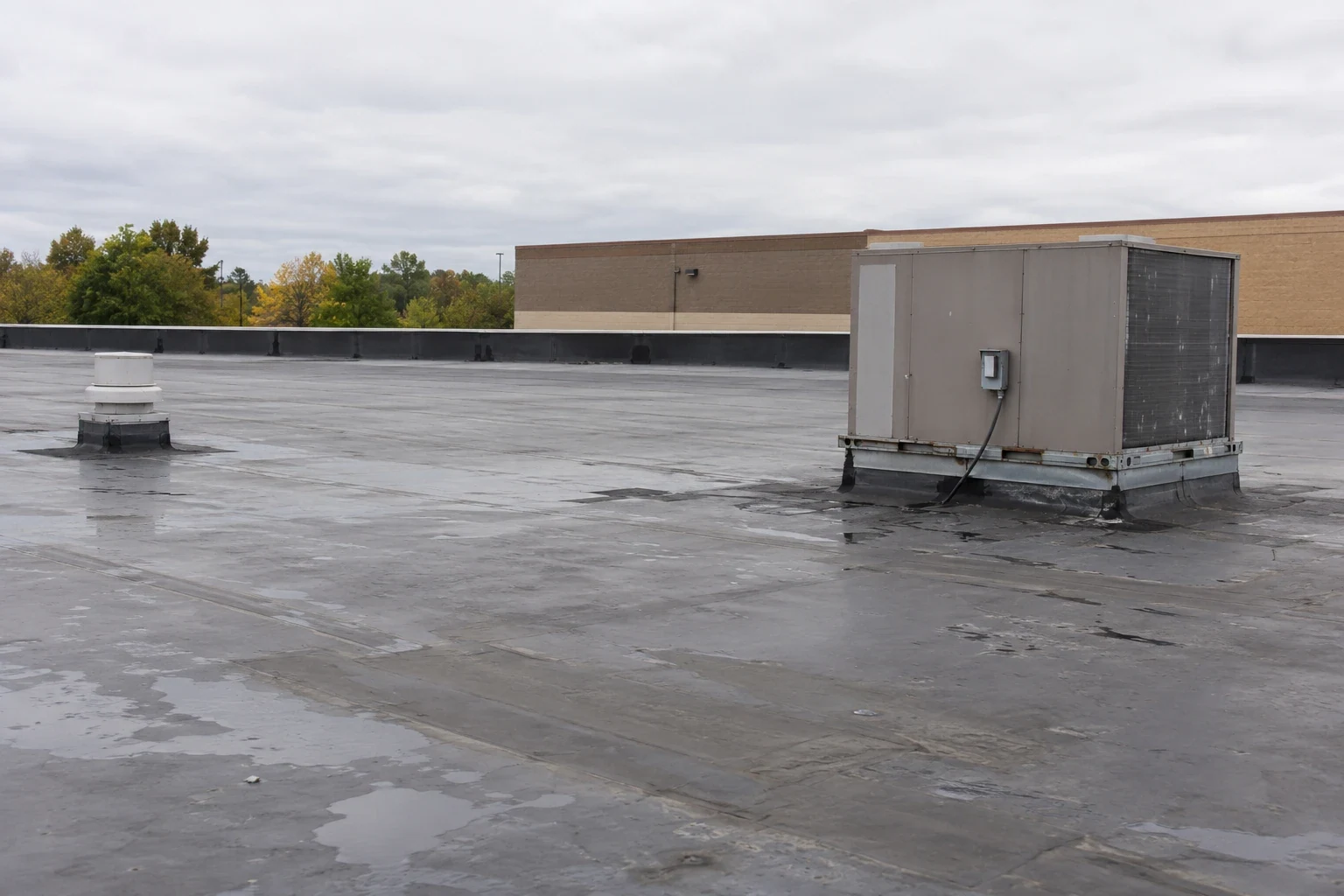
Broad retail roof surfaces may offer generous working areas while leaving their construction access concentrated at a busy receiving route. That mismatch needs examination before the owner approves material handling and removal quantities. Commercial Roofing Centennial assesses big-box retail roofing in Centennial, CO, through the actual assembly and occupied site arrangement. We define the roof boundary alongside stock protection and access required for construction.
The SouthGlenn Sub-Area includes commercial centers within Centennial's broader neighborhood setting. A large store there can share exterior circulation with customer parking and other occupied uses. We assess the actual entrances, deliveries and roof entry points before selecting staging. The scope identifies useful repairs or replacement phases without assuming that an open-looking roof makes every ground-level construction route available throughout the working day.
A broad covering may contain different concealed conditions even where its surface appears consistent. We examine representative construction and the areas associated with known defects. Previous additions or repairs can leave different layers within one footprint. Those findings influence which material can remain and where removal needs to reach damaged construction.
Condition assessment across a large retail roof also includes outlets, curbs and perimeter interfaces. At a connection to a shopping center roof section, we examine how the field reaches the neighboring material and its receiving elevation. A replacement boundary needs a suitable permanent termination or a compatible tie-in. We identify that detail before the broad covering quantity is priced, including removal and support work required to finish the selected area.
Material lifts, waste handling and storage can conflict with stock deliveries and service vehicles. We assess the actual receiving pattern with the operator before choosing positions. Required emergency access remains part of that arrangement. A staging area must support recurring construction movement rather than simply appear vacant when the initial assessment occurs.
The sequence identifies which route can be released and when the work needs it. That information allows the store team to coordinate ordinary deliveries around a definite construction task. Roof material handling and disposal remain necessary even if the sales floor stays occupied. We include their practical arrangement in the scope, helping the owner compare a complete project with an allowance that otherwise leaves ground-level work unresolved until mobilization.
Water or debris exposure during an opening can affect merchandise and occupied areas beneath it. We establish the associated interior boundary with the owner before roof removal. Stock locations and practical access influence the protection arrangement. A limited work phase may require release at one area while the surrounding sales floor remains available.
Reroofing around continuing retail use connects those interior tasks with daily roof closures. Weather, concealed findings and detail complexity influence how much construction can be opened appropriately. We explain the useful phase boundary before work begins. The operating team receives enough information to arrange stock protection or relocation without reacting to an unplanned roof opening above material that cannot remain exposed.
Cooling, ventilation and other rooftop equipment can restrict access to curbs or nearby membrane. Their service release may differ from the available field roof schedule. We identify each affected connection and coordinate the appropriate equipment parties before preparation begins. Necessary support or curb changes enter the construction plan alongside their weatherproofing.
Equipment support and curb adjustments can become important when replacement changes the finished roof thickness. Available flashing height needs examination before the new field layers are installed. We explain those related tasks within the proposed scope. The owner can then compare complete roof construction without leaving inaccessible equipment details as a separate unpriced dependency above the renewed covering.
Low areas can occur beside equipment or between drainage points even on a large roof with a straightforward overall shape. We examine relevant elevations and outlet condition before defining the work. A membrane change does not independently reshape those local areas. The proposed assembly should identify any drainage corrections necessary for its finished surface. Tapered construction may direct water around equipment or establish a suitable route between outlets. Its high points must also preserve the available height at adjoining curbs and walls, so the layout needs coordination before board quantities are fixed.
Drain and scupper construction includes the connection between the outlet and surrounding roof layers. Added insulation can change that relationship. A suitable TPO retail roof assembly needs coordinated details around the outlet as well as proper attachment in the field. We explain the material and geometry included in the proposal so the roof expense addresses the actual water routes rather than only the open covering area.
Retail operations share the River Point area in Sheridan with dining and entertainment activity. At a large store within that broader setting, incoming goods and customer movement affect where roof materials can be handled. We identify the actual receiving periods and usable exterior routes before planning a phase. The roof sequence then connects those available routes with the deliveries and removal tasks it requires.
For retail properties in the SouthGlenn Sub-Area, a grocery roof area can bring refrigeration connections into the construction route. We assess clearance at those lines and identify the responsible service release before work reaches them. The material-handling arrangement also needs room for the store's agreed receiving activity. A field phase should reach suitable closure without leaving an unavailable equipment detail exposed at its edge.
Useful localized repair should identify the defect it corrects and the condition of the material left around it. Wider moisture or deterioration can change that decision. We explain those findings before proposing another isolated patch at a repeated problem location. The owner can compare the repair's construction purpose with the larger work it would leave unchanged.
After completion, access to drains, equipment and renewed connections should remain practical. Maintenance planning for a large retail roof can direct later checks toward those service areas and developing defects. Equipment technicians should protect the covering and remove sharp debris after visits. We explain those responsibilities at handover so the owner's future roof decisions can follow observed assembly condition rather than another unplanned interruption above occupied merchandise.
Receiving routes, customer movement and available staging space can restrict material handling at ground level. Those tasks remain necessary for the roof work. We assess the actual access arrangement before planning removal quantities or deliveries.
The affected roof opening establishes the interior area requiring coordination. Stock location and access influence suitable protection or relocation. We connect those arrangements with daily closure before removal exposes the assembly above occupied space.
Concealed condition, previous repairs and additions can create different construction needs. Representative examination helps define useful retention or removal boundaries. We identify those differences before treating the entire footprint as one uniform replacement scope.
Their curbs and penetrations need compatible connections to the new covering. Added roof thickness may require adjustment, while access can need a service release. We establish those tasks before field installation leaves them as unresolved adjoining work.
The defect corrected, retained construction and wider condition left unchanged should be identifiable. A useful repair has a defined purpose. We explain that boundary so the owner can judge its expense alongside a broader reconstruction option.
Commercial roofing in Centennial
Commercial roofing in Centennial
Commercial roofing in Centennial
Commercial roofing in Centennial
Commercial roofing in Centennial
Commercial roofing in Centennial
Commercial roofing in Centennial
Commercial roofing in Centennial